The top 10 sights in Chicago at a glance
Here you can see a list of the top 10 things to see in Chicago. I was there for six days with Anita, my co-blogger here at Phototravellers. In one week the attractions are easily doable in a week. If you only have a few days days, it's best to pick your favourite places and see how much time you have left at the end. see how much time you have left.
Chicago River
Millennium Park and Cloud Gate
Buckingham Fountain
Navy Pier
Adler Planetarium, Shedd Aquarium & Field Museum of Natural History
On the Lakefront Trail through Lincoln Park
John Hancock Center
Magnificent Mile
Sears Tower
Chinatown
Tip: To explore Chicago with all its beautiful sights at a reasonable price, we recommend the Chicago Explorer Pass from Go City.
1. Chicago River  View of the Chicago River from the Wells Street Bridge. Behind the yellow water taxi you can see the LaSalle Street Bridge with its bridge cottages. At the bottom right you can also see a part of the Riverwalk, where you can walk to Lake Michigan. The river is one of the absolute top sights in Chicago.
The first thing you will notice in Chicago is the Chicago River. The river is one of the most special sights and flows right through the city, giving the grey urban jungle a very special flair.
An exciting means of transport that uses the Chicago River is the Water Taxi. Depending on the route, a ride costs an average of 6 dollars, a day pass only 10 dollars. You can pay by credit card directly on the boat. There are different routes and the stops are located along the river and on the shore of Lake Michigan. You can find more information about the Water Taxi on their website.
I can also recommend an Architecture River Cruise to anyone. On the 75-minute boat trip, you learn all about the buildings on the left and right of the river. Our guide Victor told us that he has been doing the job for 17 years, which gave him a really vast knowledge of the city's history. Tickets for the Architecture River Cruise are available here, for example.
If you prefer to stay on land, you can walk along the river to Lake Michigan on the so-called Riverwalk.
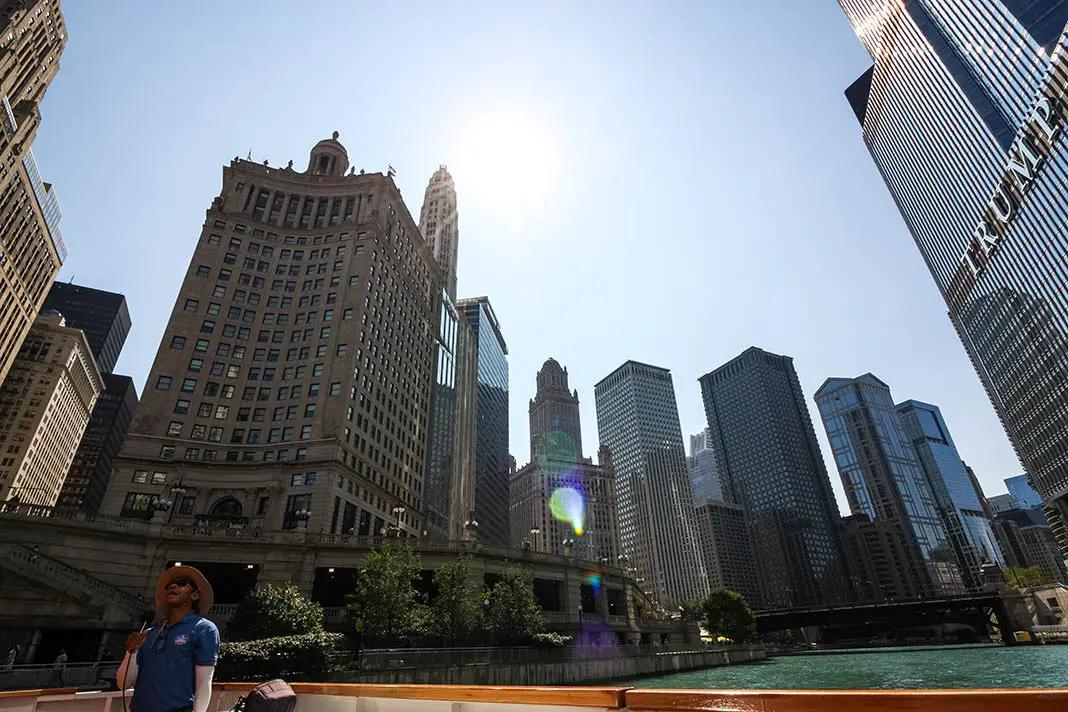
The famous Architecture River Cruise gives you a unique perspective on the city and its sights. Our guide Victor was awesome
The numerous bridges also offer great views of the Chicago River. Each bridge has its own charm, and the bridge houses are always different and exciting. From there, the bridge keeper - who even used to live there - can open the bridge for passing ships and monitor who is passing the bridge. You can also learn more about this on the Architecture River Cruise!
Millennium Park and Cloud Gate
An absolute highlight in Chicago that most will probably know is the Bean. The "bean" is actually called Cloud Gate. The sculpture by British artist Anish Kapoor weighs almost 100 tonnes and consists of 168 stainless steel plates. It took two years to build and was inaugurated in 2006. Since then, the landmark has become a classic photo motif in Chicago, on the one hand for distorted mirror selfies and on the other because the skyline is excellently reflected in the bean.

The Cloud Gate is also called the Bean because of its bean-like shape.
The Cloud Gate is located in Millennium Park, where you will also find an interactive fountain with video elements, a concert shell and many other leisure facilities. The park is open all day and - if no other events are taking place - is free of charge.
Address: 201 E Randolph Street(Google Maps)
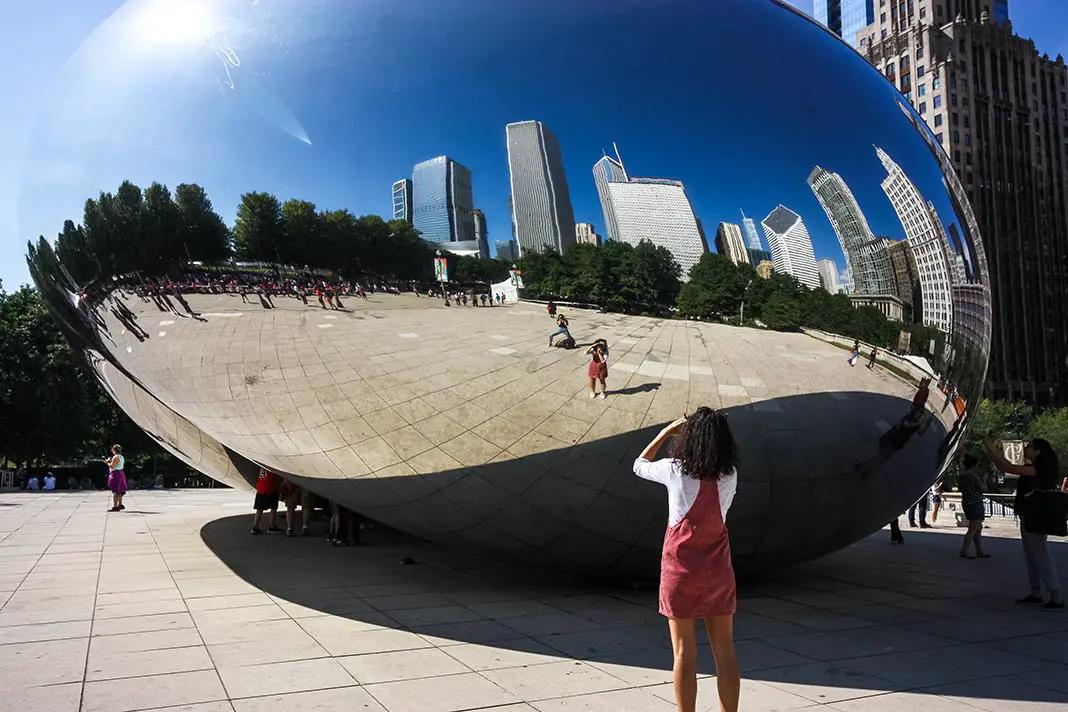
The highly polished surface of this landmark is ideal for self-portraits. Cloud Gate is one of the top sights in Chicago. 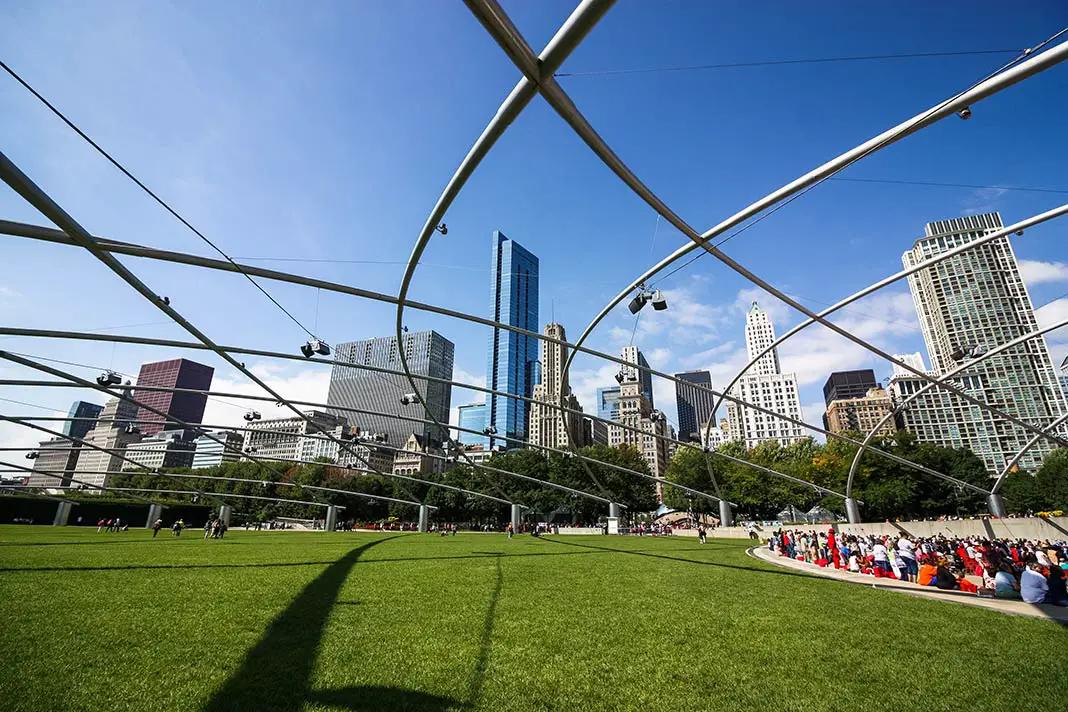 Millennium Park also has a number of other tourist attractions, including beautifully landscaped green spaces and venues. Buckingham Fountain
Millennium Park is an extension of the adjacent Grant Park. This large park is also known as Chicago's front garden and is definitely worth a visit.
Probably the most famous attraction in Grant Park is the Buckingham Fountain. This fountain is based on a model from the palace gardens of Versailles and, with about 5.7 million litres of water, is considered one of the largest fountains in the world. It is in operation every day from 8 am to 11 pm from May to mid-October. Every hour on the hour, starting at 9 am, there is a 20-minute water show, which is particularly spectacular after dark thanks to the more than 800 lights. The last show starts at 10:35 pm.
Address: 301 S Columbus Drive(Google Maps)
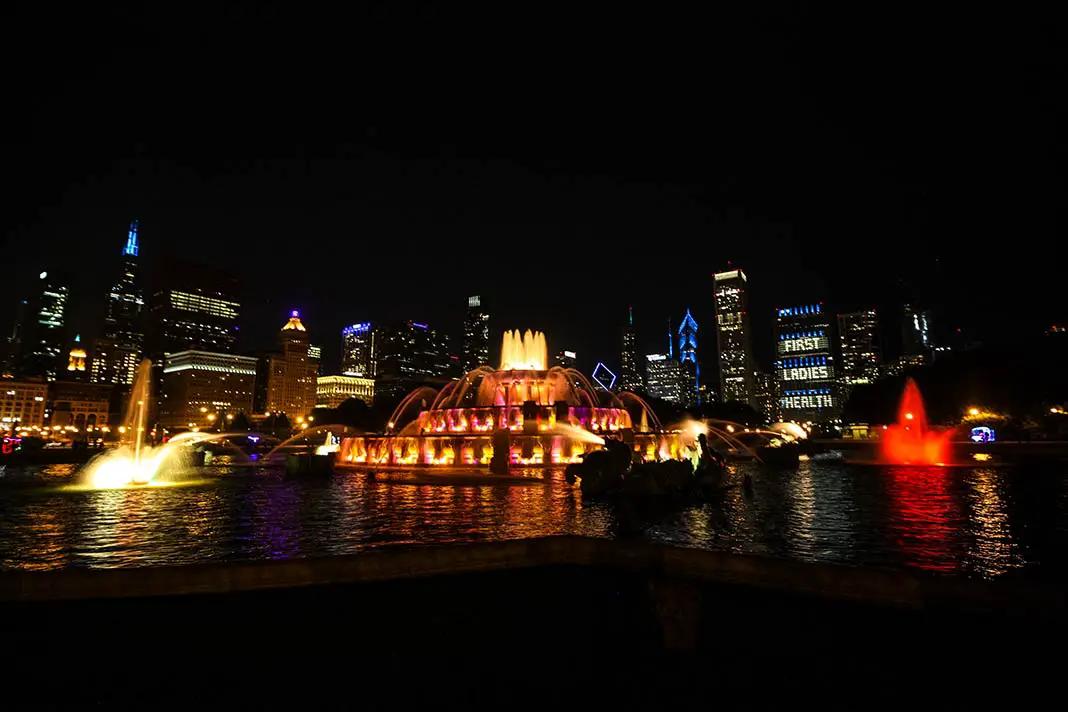
The Buckingham Fountain in Grant Park is a particularly impressive sight at night with the skyline in the background
Recommended travel guides for your trip to Chicago
We can recommend the following travel guides for your trip to the metropolis on Lake Michigan.
4 Navy Pier
The biggest sight - and one of the most popular - in Chicago is Navy Pier. The approximately one-kilometre-long pier was built in 1916 and initially served as a warehouse and mooring for freighters. Even then, however, there were also the first picnic areas and amusement facilities there.
Even at the end of September, you can often still enjoy the sun in Chicago - Navy Pier is perfect for this with its magnificent view.
As part of the World 's Fair celebrated in Chicago in 1893, the world's first modern Ferris wheel was erected at Navy Pier. You can still ride the Ferris wheel there today, and a cinema, a theatre, a greenhouse with palm trees and numerous other shops and attractions are also located at the famous Navy Pier. Many boat trips and also the water taxi depart from here.
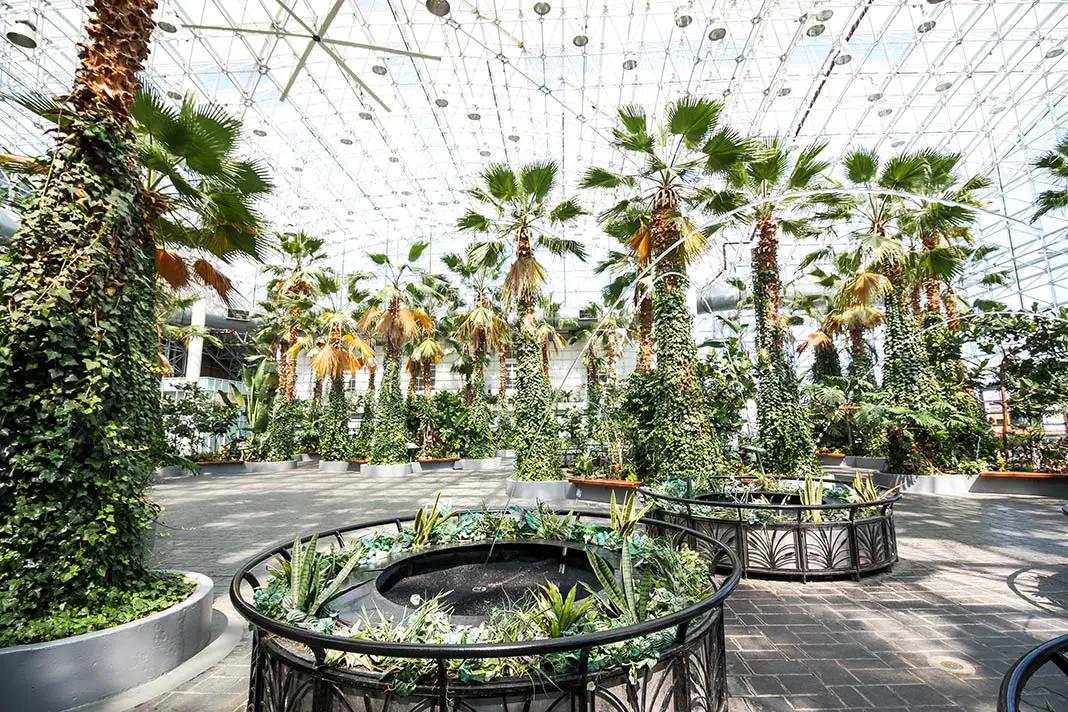
The Palm House at Navy Pier is a sight in itself and the ideal place for a relaxed get-together.
In summer, Navy Pier is great for sunbathing and offers an impressive view of the skyline and Lake Michigan. There are even fireworks on Wednesdays and Saturdays. The pier is open all year round. The exact opening hours, which change depending on the season, can be found here on the website.
Address: 600 E Grand Avenue(Google Maps)
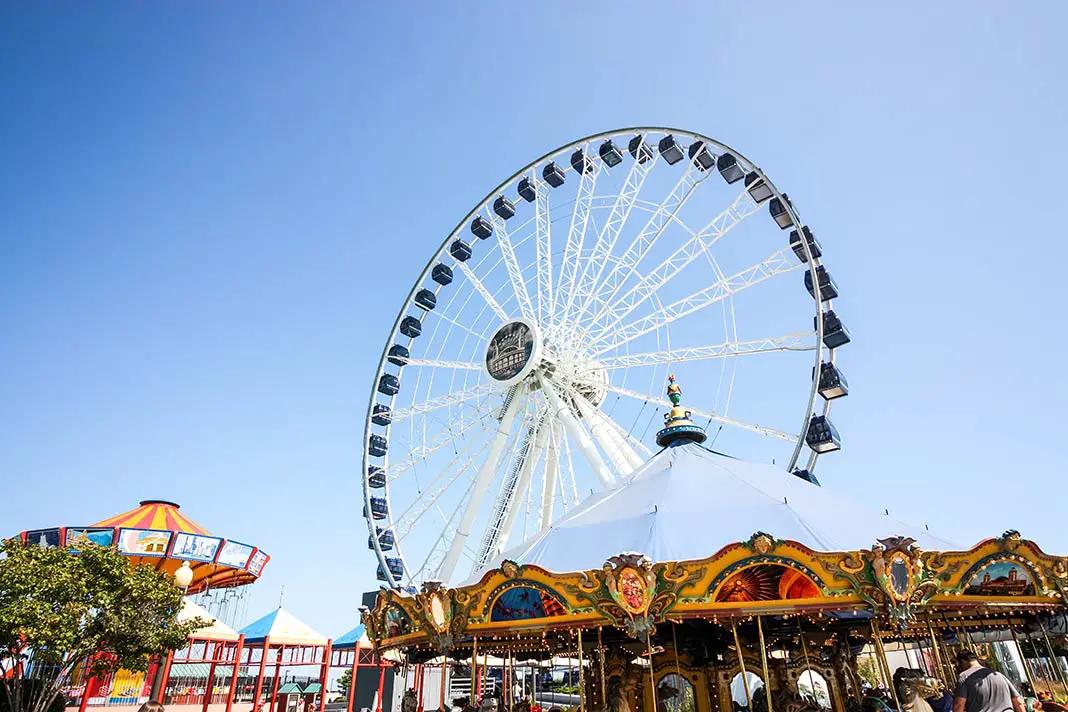
The Ferris Wheel - one of the top sights in the US metropolis - is of course no longer the original "Ferris Wheel" from 1893, but still enjoys great popularity. 5 Adler Planetarium, Shedd Aquarium & Field Museum of Natural History
You can take a water taxi on Lake Michigan along the Chicago skyline directly from Navy Pier to the Museum Campus. The park covers an area of 23 hectares and, like Millennium Park, is also part of the large Grant Park.
It is home to three of the city's most important museums and attractions: the Adler Planetarium, the Shedd Aquarium and the Field Museum of Natural History. Here you can learn everything about astronomy, the underwater world and natural history, in that order. Especially for the last of the three museums, however, you should plan plenty of time, as a visit in a single day is not considered sufficient.
On top of that you have a breathtaking view of Chicago, the Navy Pier and the Lake. Chicago, Navy Pier and Lake Michigan. This view alone is worth worth a visit!
Adler Planetarium
All info:
Address:
1300 S Lake Shore Drive(Google Maps).
Opening hours:
9am to 4pm daily. From 23 March to 18 April, from 25 May to 7 September until 6pm.
Admission:
Adults pay $19
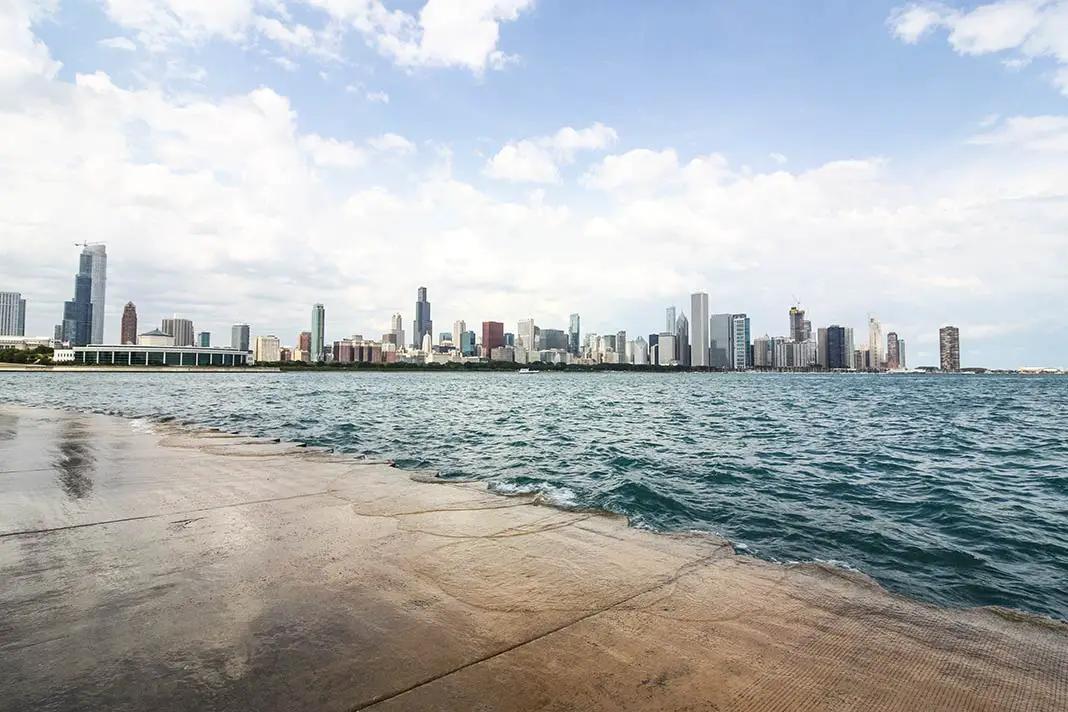
When you stand in front of the Adler Planetarium, you have this breathtaking view. On the far left, in front of the Chicago skyline, you can see the Shedd Aquarium.
Shedd Aquarium
All info:
Address:
1200 S Lake Shore Drive(Google Maps).
Opening hours:
In winter, Monday to Friday 9am to 5pm, Saturday/Sunday until 6pm. In summer daily from 9am to 6pm.
Admission:
Adults pay $39.95
Field Museum of Natural History
Address: 1400 S Lake Shore Drive(Google Maps)
Hours: 9 a.m. to 5 p.m. daily. Last admission at 4 pm
Adults | Children (6-11 years) | Students with ID and pensioners over 65 | |
All-Access Pass (all permanent exhibitions, special exhibitions and one 3D film) | 40 dollars | 29 Dollar | 35 Dollar |
Discovery Pass (all permanent exhibitions and one special exhibition or 3D film) | 34 dollars | 25 dollars | 30 dollars |
Basic ticket (all permanent exhibitions) | 26 dollars | 19 dollars | 23 dollars |
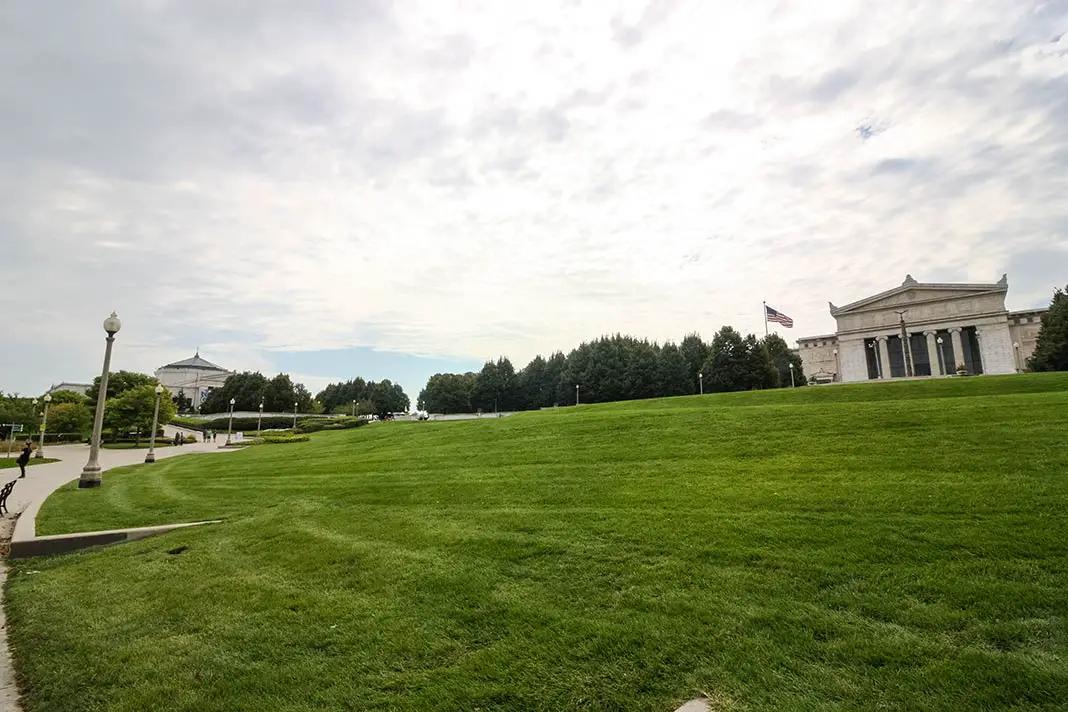
Part of the Museum Campus with the Shedd Aquarium on the left and the Field Museum of Natural History on the right. 6. on the Lakefront Trail through Lincoln Park
One of my favourite discoveries in Chicago was the Lakefront Trail. We rented a bike near Navy Pier (address: 505 N Lake Shore Drive Google Maps) for $27 for the whole day. But there are countless providers. We rode along the western shore of Lake Michigan.
The path, which is specially designed for cyclists and joggers, is just under 30 kilometres long. It is super flat and easy to cycle and offers beautiful views.
One stop along the way that you definitely have to make is North Avenue Beach. You could still get in the water there even at the end of September. And all this with the characteristic skyline in the background. A unique experience!
Address: 1600 N Lake Shore Drive(Google Maps)
The water of Lake Michigan was still really pleasant at the end of September
Also the Lincoln Park itself is a very popular destination in Chicago. This refers to the park through which almost the entire Lakefront Trail runs. With of over 11 kilometres, it is the largest public park in the city. city. There are numerous recreational facilities, museums and a zoo.
7. John Hancock Center
Back in the city centre, we go straight to the John Hancock Center. When it was completed in 1969, the skyscraper was 344 metres high, making it the second tallest building in the world after the Empire State Building in → New York City. In the meantime, however, it has been replaced by the Sears Tower, among others, but more on that later.
Floors 45 to 93 of the John Hancock Center contain living quarters that are only accessible to residents and their guests. One floor below, on the 44th floor, is the highest swimming pool in a building in all of North America.
On the 94th floor is the 360 Chicago observation deck. In good weather, you have a panoramic view of Chicago and Lake Michigan from here. A special highlight is TILT!, a moving platform that "tilts" up to 8 visitors at a 30-degree angle across Michigan Avenue. A bit of thrill and a magnificent view - what more could you want?
Recognise you can recognise the John Hancock Center by the two characteristic antennas antennas, which can be seen from afar.
All info:
Address:
875 N Michigan Avenue(Google Maps)
Opening hours:
Daily from 9 a.m. to 11 p.m., last admission at 10:30 p.m.
Admission:
Adults pay $22
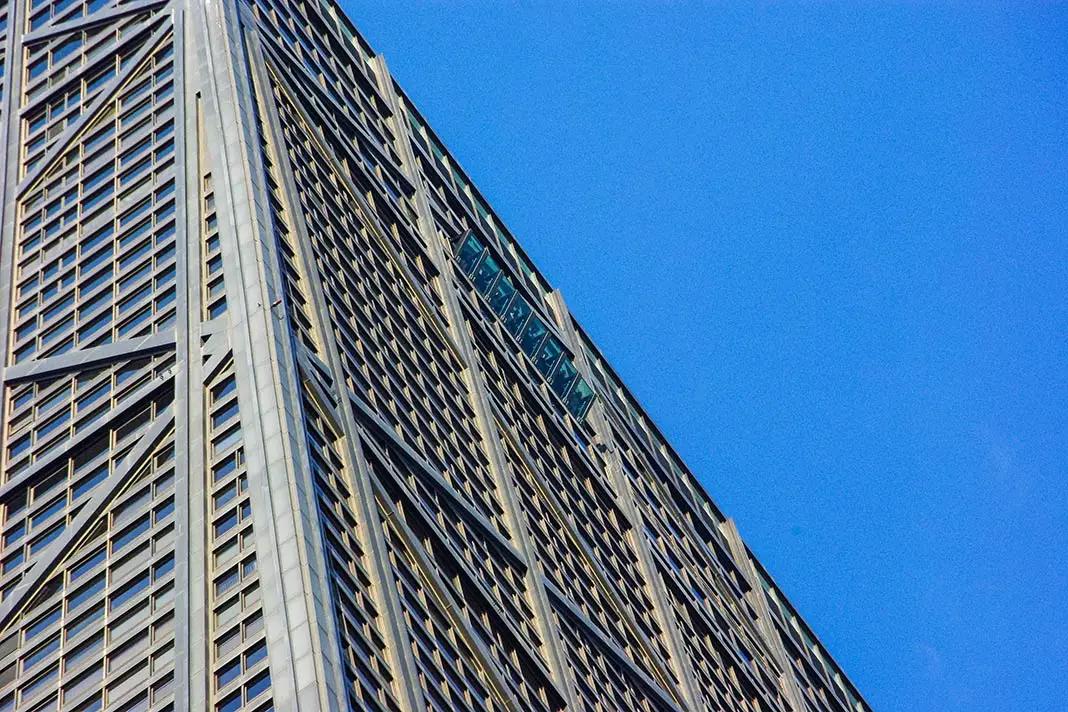
This row of windows on the 94th floor tilts out at a 30-degree angle from the John Hancock Center. Dare you to TILT!!! 8th Magnificent Mile
The John Hancock Center is located on what is known as the Magnificent Mile. This boulevard consists of the northern part of Michigan Avenue and is home to numerous luxury shops and shops.
Next to the John Hancock Center, for example, is the Water Tower Place shopping centre, where you can find everything from souvenirs to clothes and snacks. My tip: try the original Chicago popcorn mix from Garrett. It's made of caramel and cheese popcorn - sounds crazy, but you should definitely try it!
The Water Tower Place shopping centre is named after the Water Tower, which is located diagonally opposite. There is an exciting story about this sight: in 1871, there was a devastating fire in Chicago that destroyed large parts of the city centre. The Water Tower, which had been built only two years earlier, is one of the few buildings that survived the fire.
The tower, made of yellowish limestone, was originally intended to "inconspicuously" integrate Chicago's drinking water pumping station into the cityscape. The tower in neo-Gothic style is not exactly inconspicuous - but it is definitely an eye-catcher. Today, by the way, it houses a gallery and a visitor centre.
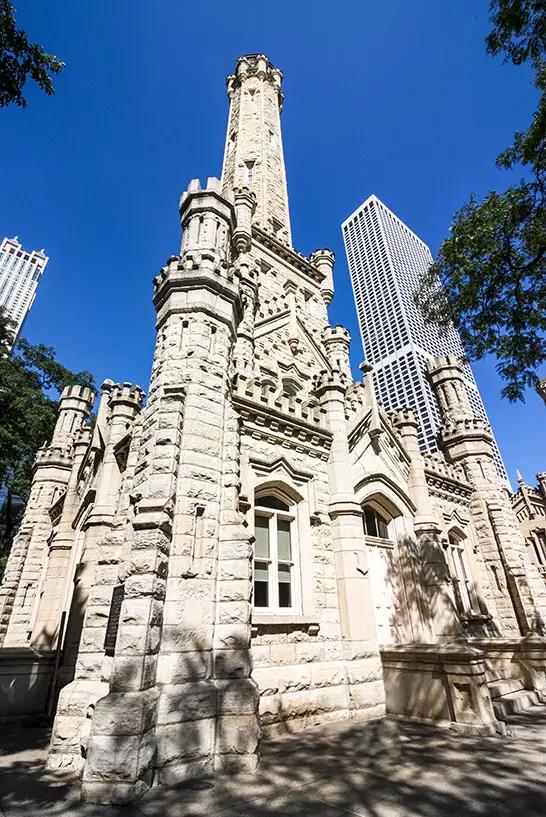
The Water Tower is one of the oldest buildings in the city and one of the top sights. 9 Sears Tower
The Sears Tower is the tallest building in Chicago, the second tallest in the USA and the twentieth tallest in the USA. and the twentieth tallest in the world. It was actually renamed the Willis Tower in 2009 but Chicagoans still call it the Sears Tower, named after a local trading after a local trading company that commissioned its construction. The skyscraper consists of nine square columns that give it stability. With this 442 metres, or 527 metres if you count the antennas. 527 metres.
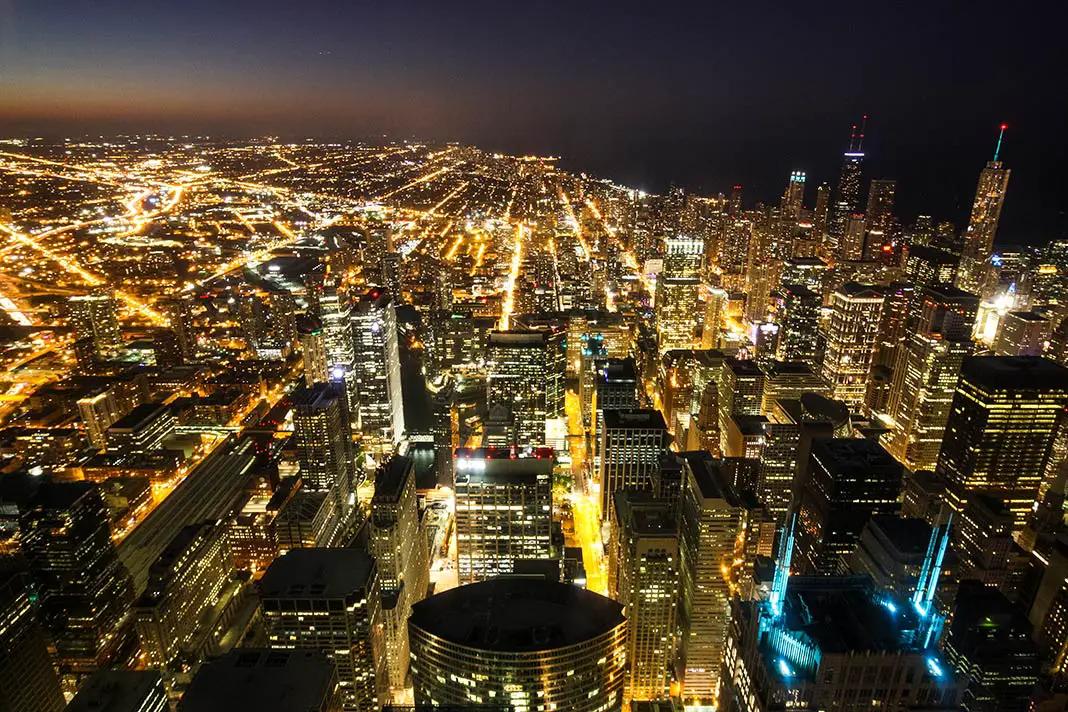
The view from the Sears Tower is also breathtaking - especially at night.
One of Chicago's most famous tourist attractions is located in the Sears Tower. It is the Skydeck on the 103rd floor. At almost 30 km/h, two of the fastest lifts in the world take you there in about 45 seconds. By the way, there is currently no building in North America other than the Willis Tower that still has a floor at this height.
The observation deck includes the four characteristic glass boxes that protrude from the skyscraper and through which brave visitors can look down vertically. I would definitely recommend the Skydeck!
Keep in mind, however, that although you can get to the observation deck quickly, you usually have to queue for a long time in front of the glass boxes. When it's your turn, you really only have a minute to take photos and can't really enjoy the moment. Besides, you have to vehemently resist having a picture taken with the "official" camera if you don't want that. You could then buy the photos at the exit for a lot of money - rather let the staff take your picture with your own camera.
All info:
Address:
233 S Wacker Drive(Google Maps).
Opening Hours:
March to September daily from 9am to 10pm, October to February daily from 10am to 8pm, Saturdays from 9:30am to 9pm.
Admission:
Adults pay $26
10 Chinatown
So far, almost all of the sights have been in the so-called Loop, Chicago's downtown district. Finally, we go a little further south, to Chinatown.
There is a Chinese quarter like this in pretty much every major US city. A visit to Chicago is also definitely recommended, as you can really immerse yourself in another world there for a short time. By the way, you can also take a water taxi to Chinatown.
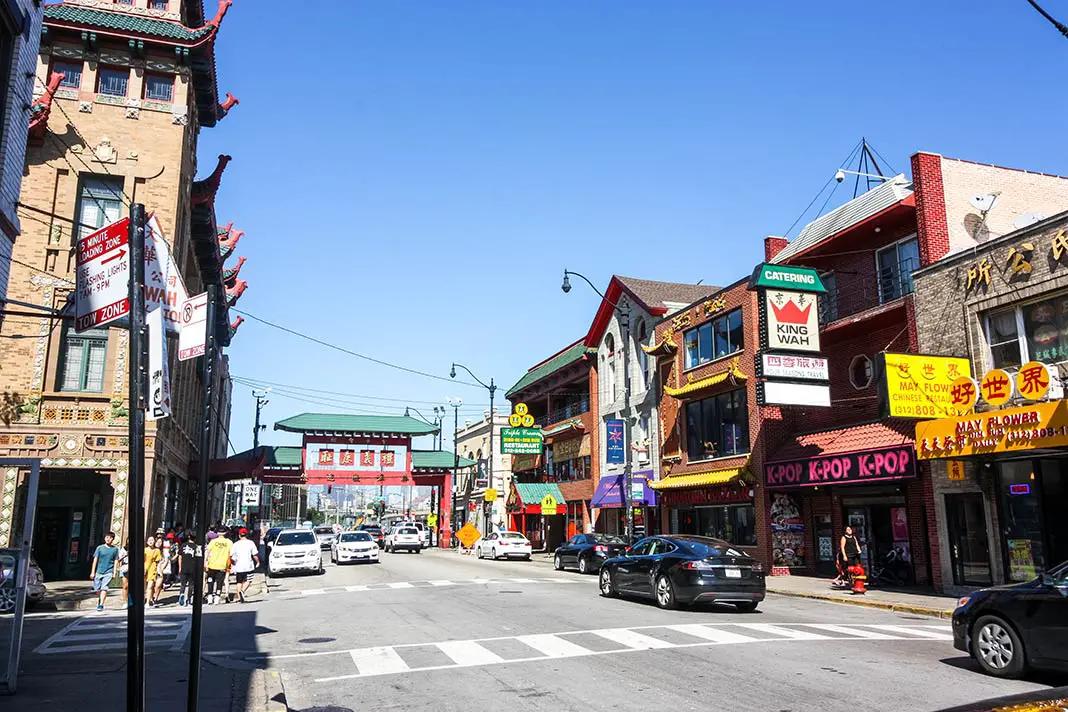
Chinatown on the south side of Chicago. Pay attention to the details - even the roof at the top left, for example, is inspired by Chinese architecture.
Other neighbourhoods in Chicago are also definitely worth seeing - after all, as I said, there are 77 of them. Little Village, for example, is also known as La Villita, an almost exclusively Mexican neighbourhood. The north of Chicago, especially the area around Lincoln Park, is more Puerto Rican.
However, there are also neighbourhoods like Englewood, Garfield Park or Lawndale that you should definitely avoid. Chicago is considered one of the most dangerous cities in the USA, partly because of the high level of gang crime.
For those interested in culture
You already know three of the most famous museums on the Museum Campus. Not far away, on the western edge of Grant Park, there is another must-see for art lovers. The Art Institute was founded in 1866 and houses 300,000 works of art from five millennia.
For a great private art collection, check out the Nickerson House at 40 East Erie Street. It is also called the Richard H. Driehaus Museum and is located in a magnificent mansion near the Magnificent Mile. Also very exciting is the International Museum of Surgical Science, which is located in the north of the city and offers an insight into the history of surgery.
Opera fans should not miss the Lyric Opera of Chicago at the Civic Opera House. With 3,563 seats, it is the second largest opera house in the United States after the Metropolitan Opera in New York.
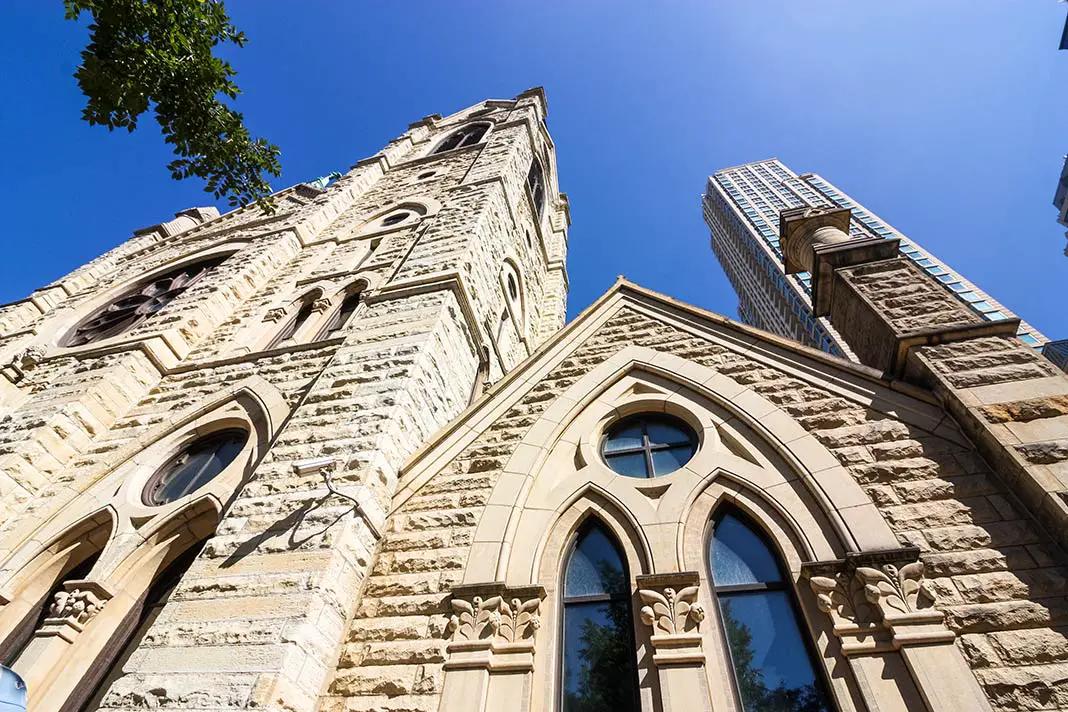
Holy Name Cathedral is a stop on the Crime & Gangster Tour. On one of the corners you can still see alleged bullet holes from a shootout that killed a mobster in 1926
If you're looking for a fun night out, the famous Second City Comedy Club is the place to go. If you're more into jazz, head to the Green Mill in the Uptown district. The bar is considered one of the oldest jazz clubs in the US and the longest continuously operating nightclub in Chicago. Incidentally, the famous Mafioso Al Capone was the unofficial owner of the Green Mill.
Speaking of the Mafia, the so-called Chicago Outfit is an offshoot of the Sicilian Cosa Nostra, known as the "Mafia". There is also a super exciting Free Walking Tour, which means there is no fixed price and you end up giving as much as you want. Our guide Matt even knew a bit of German and in two hours he took us to important places related to organised crime in Chicago and told us exciting stories about them. → You can book a place on the Chicago Crime & Gangster Tour here.
A final tip, which we unfortunately didn't manage to do ourselves, is the Garfield Park Conservatory. This is one of the largest greenhouses in the USA and a true paradise for plant lovers. for plant lovers. Admission is free.
Extra tip for series fans 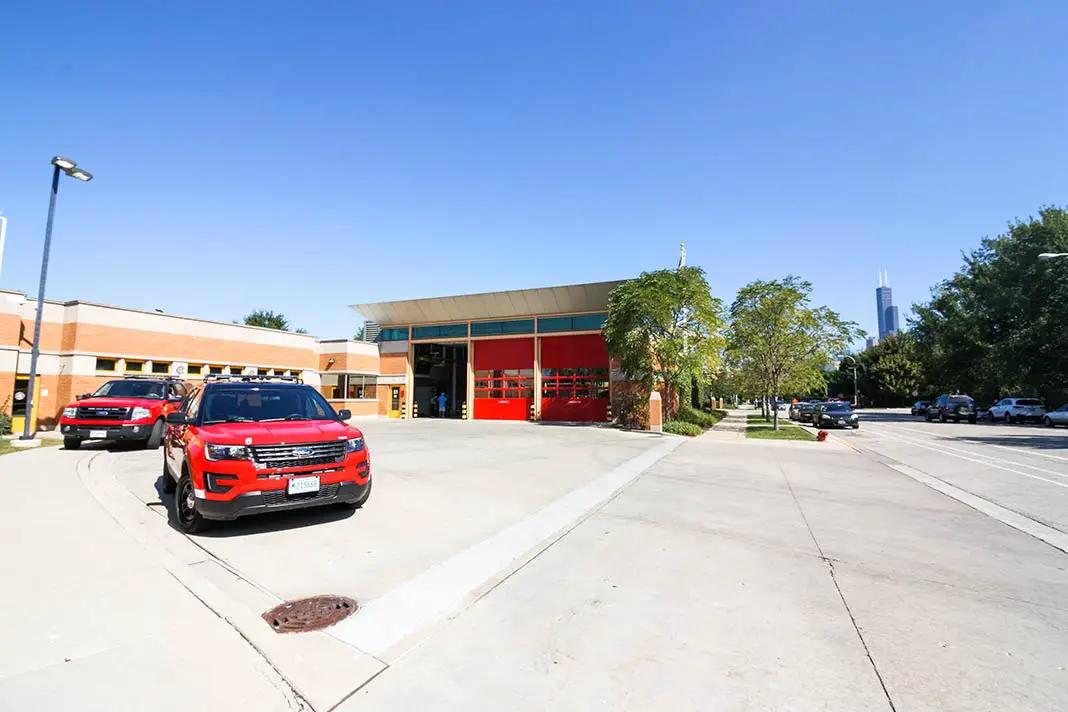 Engine 18 fire station becomes Firehouse 51 in the TV show Chicago Fire
If you're a fan of Dick Wolf's Chicago series like Anita and I are, there are two things you can't miss. One is the firehouse where Chicago Fire is filmed.
Firehouse 51 is actually called Engine 18 and is located at 1360 S Blue Island Avenue(Google Maps). This is a real firehouse, with actual firemen and women working there. You should keep that in mind when you go there. It is possible though - the people there are super nice and are happy to give tours of the building and tell you about their experiences with the actors.
The firefighters who work there will be happy to show you around and take some great souvenir photos.
You can also buy a fire station t-shirt for $20. Look out for notices on trees and street lamps in the neighbourhood to find out when filming is taking place. You may be able to catch a glimpse of the shoot, but please be respectful and follow the instructions of the staff.
You can also visit the police station from Chicago P.D., Chicago Fire's spin-off about the city's police officers. It's not very exciting inside, but you'll definitely recognise the building in outdoor scenes. Also, the Maxwell Street Station, which is home to the 21st Precinct in the series, is just a few minutes' walk from the fire station - at 943 W Maxwell Street(Google Maps).
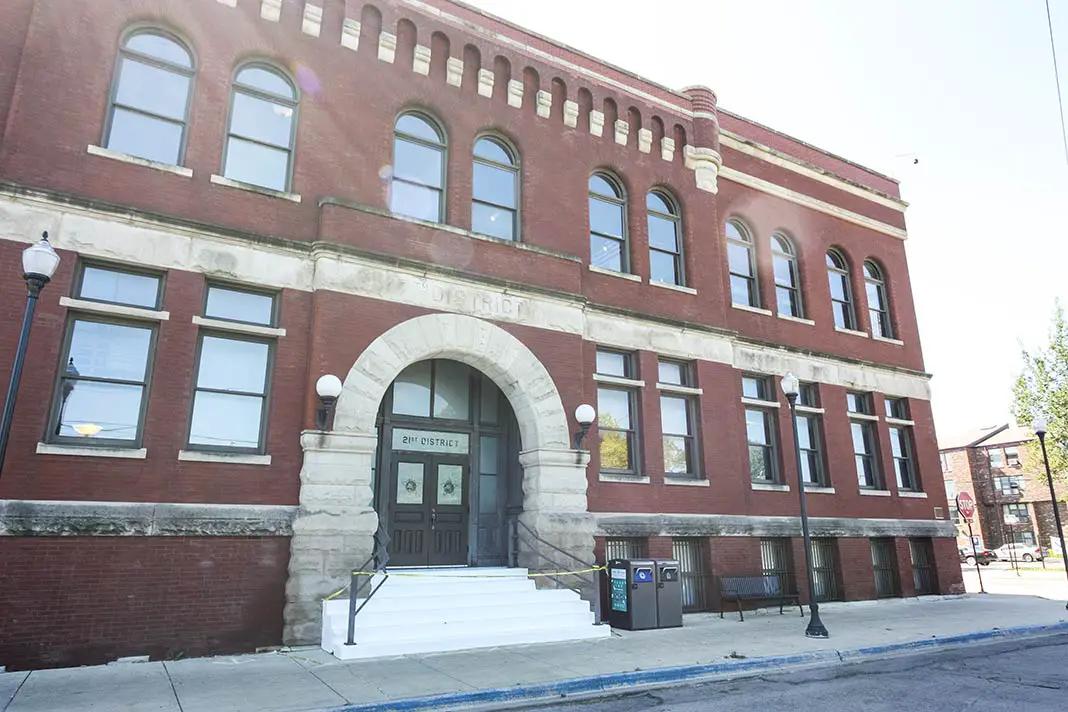
This is where the exterior scenes of the Chicago P.D. police station are filmed Chicago Explorer Pass
We can definitely recommend the Chicago Explorer Pass for just under 75 euros. It allows you to visit 3 attractions. The option with 4 attractions costs almost 100 euros, the one with 5 about 111 euros. You can choose the sights you want to visit yourself.
These include the Skydeck and 360 Chicago, the Adler Planetarium, the Art Institute, the Architecture River Cruise and many more. Another bonus: at some attractions you can use the "Fast Lane" and don't have to wait in line as long. Get the Chicago Explorer Pass.
The best (secret) photo spots
You already know the most famous attractions in Chicago - Cloud Gate, Navy Pier, North Avenue Beach and Skydeck, to name a few. If you like taking photos, you should also check out the 9 best → photo spots in Chicago!
Where to stay in Chicago - the best hotel tips
If you want to stay in a central location, you'll have to budget a little more. But then there are fantastic central Chicago hotels that you mey choose. For example, the 4-star The Silversmith Hotel (check prices here*), which is located right next to Millennium Park, hotel Chicago Union Station on www.hotels-chicago-il.com, located super-central of the city. The 4-star Virgin Hotels Chicago (check rates here*) is also very centrally located and also has its own rooftop bar and nightclub. A cheaper option is the 3-star HI Chicago Hostel (check rates here*), which is also close to Buckingham Fountain.
Another great option is holiday flats. For example, the Kasa Chicago (check prices here*) in the South Loop, a modern flat with great connections to the city centre. The Wicker Park Apartment (check prices here*) in the Northwest is also great and is close to the Division Station on the Blue Line, which goes to the city centre and Chicago Airport.
Eat & Drinking in Chicago
If, like me, you like to try typical dishes and drinks when travelling, you should definitely take a look at the exclusive restaurant tips in Chicago. I'll also show you the signature dishes and best bars in the city.
Getting there and transport
O'Hare International Airport is a major US hub. Here you can find out the best way to get from Chicago Airport to the city.
If you are travelling from elsewhere in the USA, you may arrive by train or bus. The busiest station is Union Station, which is close to the Willis Tower and is also architecturally stunning.
Probably the most famous bus terminal is owned by Greyhound and is not far from Union Station. I was warned before our trip that in the USA, apart from other European travellers, only long-distance buses are used by those who cannot afford their own car or want to avoid the strict airport controls. The Greyhound terminal was indeed not very inviting, but we had no problems there.
There are also numerous ways to get around in the city itself. The Ventra Card is a reloadable card from the CTA, the Chicago Transit Authority. With it, you can use all the CTA's means of transport, such as the L. You simply get the card at the station. You can easily get the card from the machines at the stations of the elevated train and can then either load day passes or certain amounts of money.
You already know our favourite means of transport: the water taxi. Of course, you are very limited and can only move along the river. However, you can cover long distances relatively quickly.
In downtown Chicago, you can also get around on foot and reach most of the sights. You can also overdo it - like Anita and me: on one day, we covered almost a half marathon with just under 21 kilometres and covered the Riverwalk, Millennium Park, Navy Pier, the Skydeck and some photo spots within 14 hours. In between, we even had time for the Architecture River Cruise.
If that's a bit too much for you too much, you should definitely download the Uber app. It gets you It's a fast, reliable and cheap way to get around. We used this option option when we needed to get further away from the city centre - for example to the fire fire station, for example - or if the way home was just too far at the end of the day. far at the end of the day.
Events and sports
One of the most famous events in Chicago is Saint Patrick's Day. Because of the many Irish immigrants who have come to Chicago since the 19th century, it is celebrated in a particularly big way. The highlight: the entire Chicago River is dyed green.
There are also numerous other events, such as a blues and a jazz festival or the Taste of Chicago, the largest food festival in the world. The Air & Water Show is an annual air show in August consisting of performances by the world's best military and civilian pilots on the shores of Lake Michigan. There is even a "Christkindlmarket" in Chicago, probably due to the high number of German immigrants.
Sports fans also get their money's worth in Chicago. American football is represented by the Chicago Bears, ice hockey by the Blackhawks, basketball by the Bulls and the Wolves, and baseball by two Major League teams, the White Sox and the Cubs. The latter team's venue, Wrigley Field, is said to be particularly worth a visit. The Chicago Fire football team - not to be confused with the TV series - should also be familiar to many: Bastian Schweinsteiger played here until 2019.
Figures and facts about Chicago
Chicago is also called "Windy City" - but the name probably doesn't come from the strong wind that blows there. wind that blows there, but can also mean windy in can also mean windy in relation to politicians. Since Chicago was one of the most corrupt of the most corrupt cities in the 20th century, it was given this nickname.
Chicago is the 2.7 million inhabitants, Chicago is the third-largest city in the USA after New York City and Los Angeles. Los Angeles
In the 9.5 million people live in the metropolitan region, including the suburbs. people
Chicago was used for served as the backdrop for the fictional metropolis of Gotham City Gotham City metropolis
In 1892 the of the Chicago River was reversed to bring fresh water from the lake into the city and improve and improve pollution levels.
In winter it can can get very cold in the city - in 2019, for example, temperatures of of -30 degrees were measured