Young and largely modern, the city of Sofia, the capital of Bulgaria, is not a large metropolis, but it is a fascinating reality that preserves an eclectic and exotic atmosphere, thanks to its onion-domed churches, Ottoman mosques and anachronistic monuments to the Red Army, to which are added Roman remains dating back almost 2000 years. Away from the palaces and busy boulevards, the vast parks and perfectly manicured gardens provide welcome moments of relaxation.

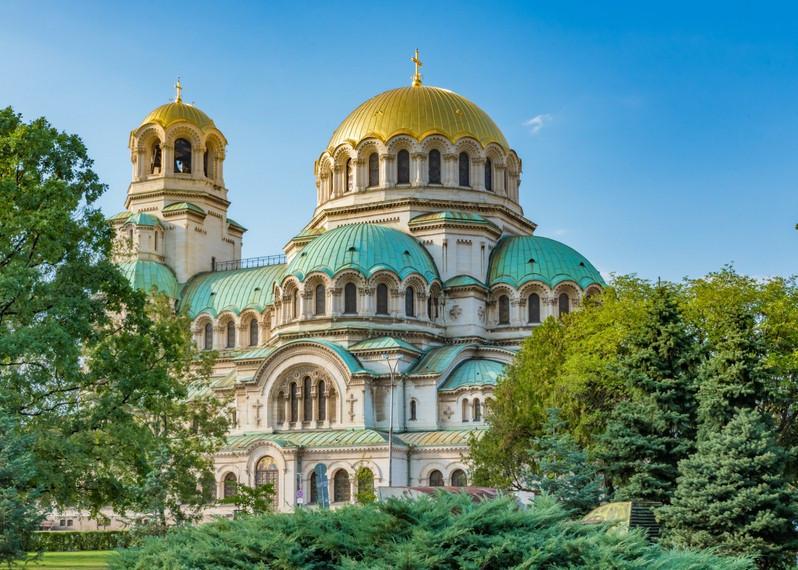
Aleksander Nevski Cathedral ©Mariyan Tashev/500px
What to see in Sofia in 2 days: history, art and spirituality
Many sights are located in the cosy city centre and generally within walking distance of each other, although you will have to reach the suburb of Boyana, far from the centre, to visit the city's largest museum and its most revered church.
Begin your journey of discovery in Sofia by going to the roots of its earliest origins: the archaeological excavations of the Ancient Serdica Complex will give you a sense of Bulgaria's long and tumultuous history. Then dive into the grandeur of the 19th century, when Sofia was the capital of Europe's youngest state, at the Sofia Museum of History, housed in the premises of the old Sofia Baths, an elegant building with an alternating white and ochre façade from the early 20th century. Take a stroll to Sofia's main attraction, Aleksander Nevski Cathedral, and don't miss the Church of St Sophia, after which the city is named: it is one of the oldest in the capital, and in Bulgaria, and its underground museum reveals the remains of an ancient necropolis with 56 tombs and those of four other pre-existing churches. Outside are the Tomb of the Unknown Soldier with the eternal flame and the tomb of Ivan Vazov, Bulgaria's best-loved writer. For art lovers, we recommend a stop at the prestigious Quadrat 500 National Gallery, whose rich holdings encompass hundreds of works ranging from African tribal masks to 19th and 20th century paintings.
Dedicate your second day to Boyana, a quiet, thriving suburb 8 km south of the centre. Once the retreat of communist leaders and party members, it is now the chosen area of residence for Sofia's wealthy elite and is home to two of the capital's most important sights. The 13th-century Boyana Church, a UNESCO World Heritage Site, houses 90 frescoes that represent one of the finest examples of medieval art in Bulgaria. Particularly noteworthy are the oldest known portrait of St John of Rila and some depictions of King Constantine Asen and Queen Irina. The combined ticket also allows access to the National Museum of History, which is worth a visit for its Thracian gold treasures, Roman statues, folk costumes and icons; outside, some Russian MiGs are on display.
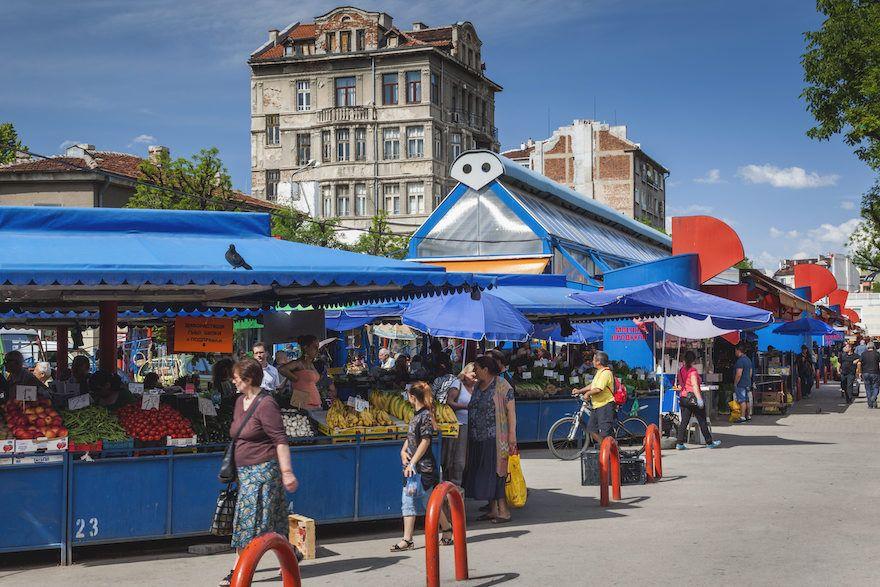
Women's Market ©Walter Bibikow/Getty Images
What to do, what to eat, what to buy in Sofia, Bulgaria
A fun and worthwhile way to explore Sofia and learn about Bulgaria's history is to rely on enthusiastic volunteer guides who offer various tours (both free, with a welcome offer, and paid). In particular, the Free Sofia Tour is a two-hour walk that touches on the city's sights and, while narrating them, brings aspects of local culture to the fore; to participate, just turn up at 11am or 6pm at the meeting point in front of the Palace of Justice.
What to eat in Sofia
When it comes to cuisine, you're in for a treat: Sofia is home to some of the best restaurants in Bulgaria, both traditional and international. In summer, cafés seem to occupy every corner of the garden and pedestrian walkway, and kiosks selling tasty local snacks such as banitsa (made of puff pastry filled with cheese) and palachinki (pancakes) are dotted around the city. Fruits, vegetables, fresh dairy products and grilled meat are the basic ingredients of Bulgarian cuisine, which, besides its own Balkan traditions, is strongly influenced by Greek and Turkish. The two ubiquitous specialities on menus are kebabs (spicy pork sausages cooked on the grill) and kyufte (a kind of pork burger).
Sofia's nightlife
Sofia at night explodes with zest for life: you will find an endless array of bars and clubs, as well as pleasant kiosks in the city parks where you can enjoy beer at bargain prices. At the other end of the spectrum, the centre is teeming with sophisticated bars that have recently opened. The cultural entertainment offer is also rich and has as its main reference the National Palace of Culture (NDK): with its 15 halls, it is the largest cultural complex in Bulgaria and offers a regular calendar of events throughout the year, ranging from film screenings to commercial exhibitions and concerts by big names in international music.
Finally, to buy some souvenirs, look around the Sofia Baths and Aleksander Nevski Square: there are artists selling paintings, the subjects of which are mostly traditional rural scenes. Here you will also find stalls full of reproductions of icons, jewellery, souvenirs and embroidery, but be wary of the supposed 'antiques'. Other shops with the usual assortment of postcards, paintings and books are in the Nezavisimost Square subway. For a taste of local life, drop by the Women's Market (Zhenski Pazar), which looks like a corner of the Middle East transplanted in Bulgaria.
Read also:
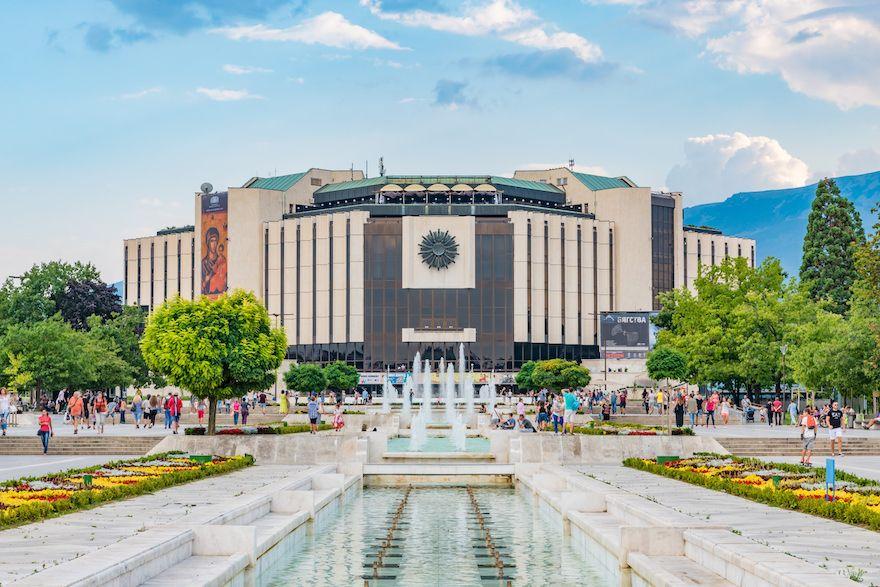
National Palace of Culture ©Takashi Images/Shutterstock
How to get to Sofia and Bulgaria
The main point of entry into the country for those arriving from Italy isSofia Airport, 10 km east of the centre, to which it is well connected by metro (you can buy tickets directly at the station just outside Terminal 2) and bus No 84 (tickets on board). The two airport terminals are both equipped with basic services, ATMs and OK-Supertrans Taxi counters.
Sign up for our newsletter! For you weekly travel tips, special offers, stories from the world and 30% discount on your first order.

