An ancient village on an island in a lake, a fascinating Arab settlement, a white Mediterranean town or a village in the Alps that can only be reached by cable car.
Here are some ideas for a weekend inItaly's lesser-known, less-touristy and absolutely undiscovered villages and towns.
Sometimes a weekend is enough to escape to other worlds and cultures while staying at home. Here are 20 unusual destinations for a weekend in Italy.
 "/> Island of San Giulio, Lake Orta, Piedmont

Beautiful and damned is the island of San Giulio in Lake Orta, in the province of Novara. According to legend, the island was haunted by snakes and dragons.
In 390 San Giulio landed there, carried by his cloak and guided by his staff. Here, the saint founded his church and turned the island into the centre of evangelisation for the entire region.
What is certain is that the island of San Giulio attracts with its mysterious charm. An elegant Romanesque basilica will welcome you as soon as you disembark, before you lose yourself in the alleys of the village.
Walking through the narrow streets of Orta San Giulio, you will find yourself in the beautiful Piazza Motta, overlooking the lake and surrounded by historical buildings including the late 16th century Palazzo della Comunità della Riviera di San Giulio.
Then explore the entire island by following the Via del Silenzio, a small road that passes by ancient villas, gardens and small alleys descending to the calm waters of the lake. And pay attention to the messages of Mother Abbess Canopi which, if read while walking in one direction, are about silence, in the opposite direction about meditation.
Tursi, Basilicata 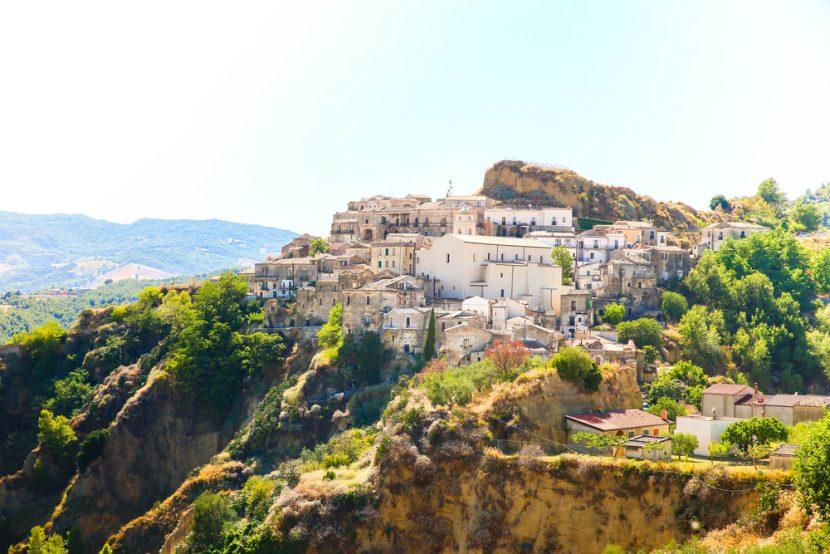
Tursi is a charming village in the province of Matera that has preserved the appearance of the ancient Arab settlement.
It is a medieval centre, originally developed around the castle, built by the Goths around the 5th century. Byzantines, Normans, Swabians, Angevins but above all the Saracens have left their mark on this ancient Lucanian village.
La Rabatana, in fact, the oldest district of Tursi, bears witness to when, around 850, the town was inhabited by the Saracens, who profoundly influenced the local architecture and dialect.
Due to its excellent defensive position, Rabatana grew in size over time, becoming an important centre. Today, you can still retrace the narrow streets among the ruins of the original nucleus where poor dwellings were built, often comprising only a space on the ground floor.
In the Rabatana, don't miss the church of Santa Maria Maggiore, dating back to the 10th-11th centuries, where you can admire the frescoes attributed to Giovanni Todisco, the stone crib and the ancient crypt. Then visit the Cathedral of the Annunziata overlooking the square of the same name where other important buildings such as the town hall are also located.
A short distance away you will also see Piazza del Mercato Coperto, Piazza del Monumento and Piazza Terrazzo sul Pescogrosso.
Look out for other churches and historical buildings in the centre of Tursi before visiting the splendid Sanctuary of Santa Maria Regina di Anglona, near the village, where Pope Urban II stayed in 1092. Tursi is also known as the birthplace of Albino Pierro, several times nominated for the Nobel Prize for Literature, so don't leave without visiting the Literary Park dedicated to the great Lucanian writer and poet.
Portopalo di Capo Passero, Sicily 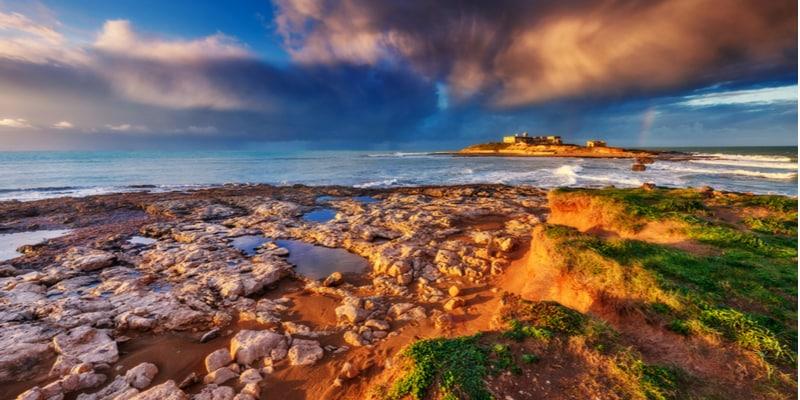 "/>
On the last strip of south-eastern Sicily and at the southernmost tip of Europe lies Portopalo di Capopassero.
It is the southernmost municipality on the Sicilian island and furthest south of Tunis. Accessible by a spectacular scenic road adjacent to the sea, Portopalo is a seaside village bathed by the Ionian and Mediterranean seas.
Via Vittorio Emanuele is the main street that bisects the village overlooking the two seas. In the centre is the church of San Gaetano, dedicated to the patron saint of Portopalo.
The village also boasts the largest tuna fishery in Italy, but it has been in a state of total abandonment since the 1990s.
Nearby is the Tafuri Castle, in unmistakable Art Nouveau style, which dates back to 1935 and stands on a rocky ridge along the south-east coast of Sicily. In front one can see the island of Capo Passero, which was once a peninsula, and the island of Correnti, which still becomes one during low tide.
Posada, Sardinia 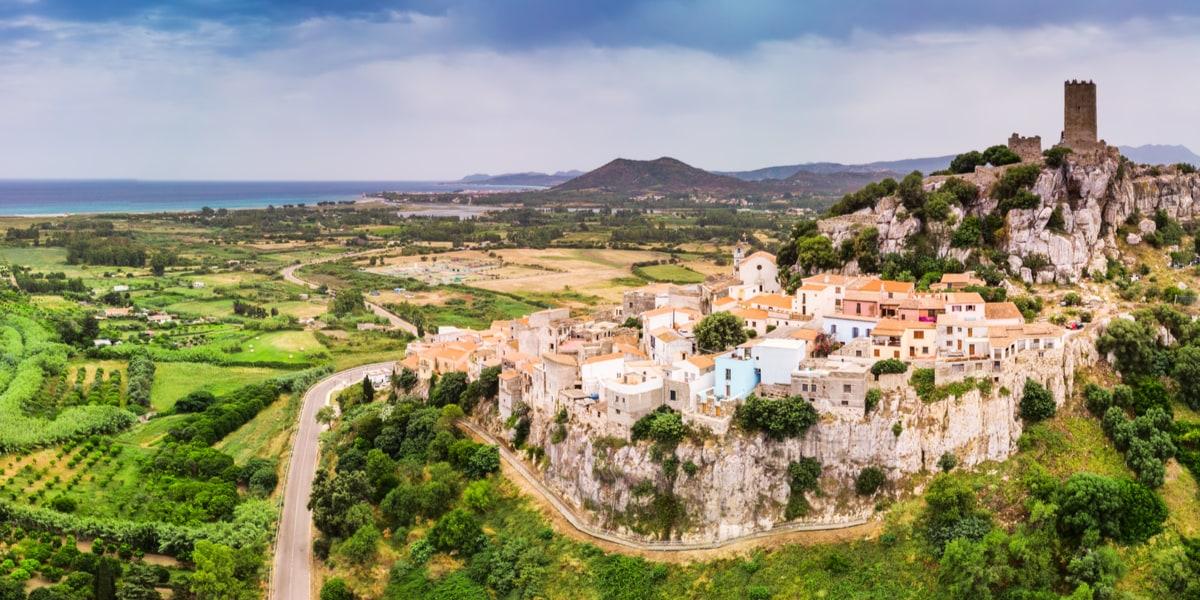 "/>
Perched on a limestone hill, Posada is a small village in Baronia, north-eastern Sardinia, included in the list of the 'most beautiful villages in Italy'. Posada is one of the oldest Sardinian centres.
It was probably an Italic-Etruscan settlement (5th-4th century B.C.). In Roman times everything revolved around the portus Liquidonis, today San Giovanni di Posada, a seaside village dominated by an Aragonese tower. As the Latin toponym Pausata announces, the village was a stopping place and frontier town. Today, Posada retains its medieval charm with a labyrinth of alleys, steps and small squares. In the centre is the parish church of Sant'Antonio Abate.
Towering over the centre is the 13th century Fava Castle. At the foot of the village lies the valley of the Posada stream, which can be climbed by kayak, recommended for nature and archaeology lovers. Around Lake Maccheronis, on the other hand, bike routes wind through the Tepilora park, one of the largest and most beautiful green areas in Sardinia. Here, you can admire the pink flamingos in the San Giovanni pond or relax on the beach of the same name.
Chiavari, Liguria 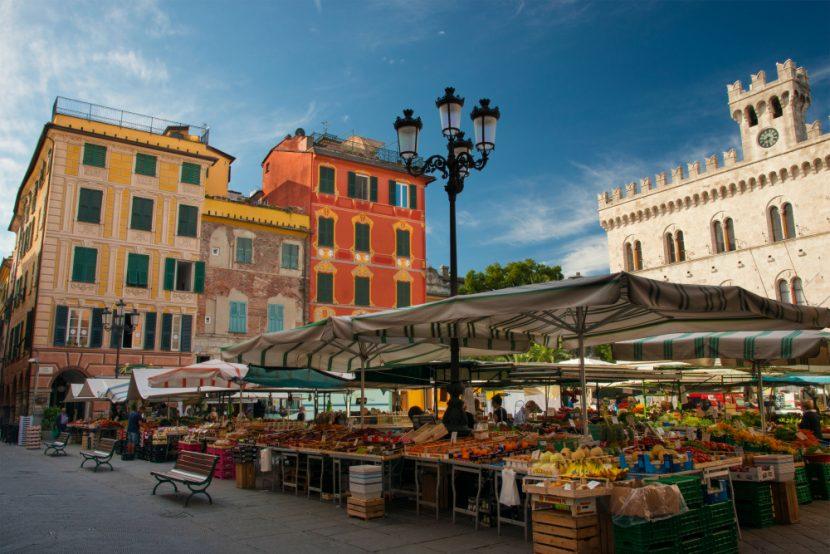
Chiavari is the nerve centre of the Tigullio: the main commercial, residential and financial centre, as well as one of the most important tourist ports in Liguria. It is a city of ancient maritime traditions where everything tells of its close relationship with the sea.
Along the caruggi of the historical centre run kilometres of arcades that will make you feel you are still in the medieval city.
Under the vaults of the arcades of Borgolungo, the centre of Chiavari, go in search of elegant shops, historic cafés and ancient fainotti (the trattorias with wood-burning ovens renowned for farinate and savoury pies). Look out for craft workshops, including those that produce chiavarine, the traditional wooden chairs. In the centre, don't miss the cathedral of Nostra Signora dell'Orto, the bishop's seat and Marian shrine from which the procession for the patronal feast in July departs. Chiavari also boasts one of the oldest castles in the Tigullio area.
It was a defensive building constructed in the first half of the 12th century, of which only the upstream keep with its two water cisterns, a fortified parade ground and part of the walls remain today.
The other centre of Chiavari then is the tourist port, one of the busiest berths for boats and cruises bound not only for the rest of Liguria but also for Tuscany, Sardinia, Corsica and the Cote d'Azur. Then take the promenade that connects the waterfront with the marina area for about 2 km along Corso Valparaiso.
At one end of the Corso is the charming Piazzetta dei Pescatori, an excellent spot from which to admire the sunset over the Riviera. The Villa Rocca Botanical Park is a green oasis right in the centre and another enchanting panoramic spot overlooking the city and the sea. Finally, west of the marina are several city beaches that are easily accessible on foot. Chiavari also has free, disabled-accessible beaches with a dog area.
The most family-friendly beach is the one near the station, which has an aquapark with no less than 18 inflatables. Otherwise explore the most beautiful ones in the surroundings: Baia dei Paraggi, Baia del Silenzio, Baia delle Favole and Baia di San Fruttuoso.
Acciaroli, Campania 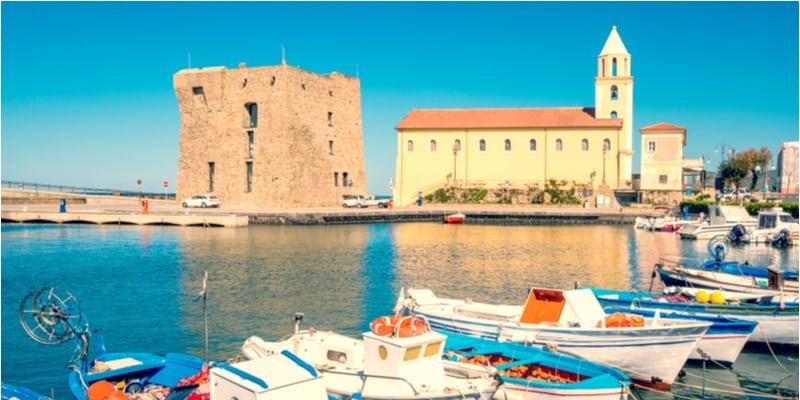 "/>
Acciaroli is one of the most characteristic seaside villages in Cilento and is the largest hamlet in the municipality of Pollica.
Locals tell of Ernest Hemingway's stays there, of which, however, there is no proof. According to the inhabitants of Acciaroli, Hemingway arrived in the Cilento village for the first time during the Second World War, as a member of the American Fifth Army, and then returned in quieter times.
Here he is said to have met Antonio Masarone, a fisherman who would partly inspire his masterpiece The Old Man and the Sea, which was conceived during his Cuban sojourns. Beyond the legend, it is worth visiting Acciaroli and seeing the Church of the Annunziata, built in 1187, the remains of an ancient Angevin defence tower, and then wandering around the narrow streets and alleyways of the town leading to the port.
Acciaroli is also home to some of the most beautiful beaches in the Cilento area, which have been awarded the 5 sails of Legambiente for years. These include the Spiaggia Grande, the Caleo beach, Trentova, the Buon Dormire bay, Punta Licosa and the Marinella beach. Not far away, the village of Pollica is also worth a visit, with its medieval castle from 1290 and the chapel of S. Pietro from 1524.
Teggiano, Campania 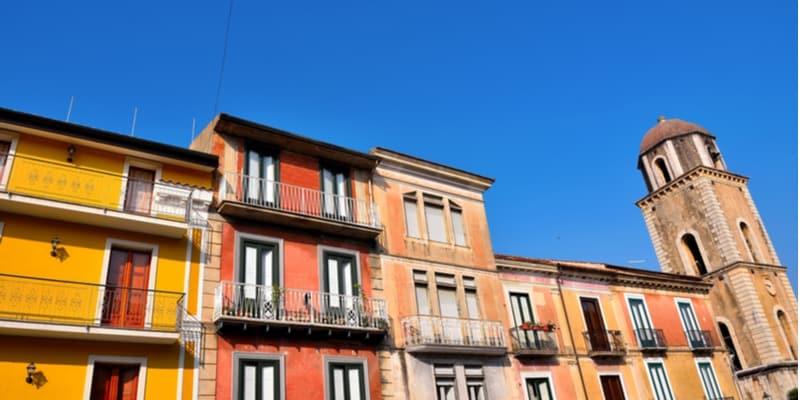 "/>
Teggiano is one of the few villages in the province of Salerno that has maintained its stronghold-like appearance intact.
Formerly called Diano, or Rianu in the Teggianese dialect, it was especially in the late Middle Ages that it gained importance in the Vallo di Diano. In fact, the powerful Sanseverino family built the castle there and chose it as a stronghold where they could take refuge in case of danger. Today, Teggiano has been declared a UNESCO World Heritage Site.
The village still retains the high medieval walls that enabled the town to defend itself from the attacks of the King of Naples, Ferdinand of Aragon. Explore the historical centre with its medieval and Renaissance architecture that attracts thousands of tourists every year.
Among the religious buildings, the 14th-century St. Francis Convent and the 12th-century St. Peter Diocesan Museum are worth a visit. The Herb Museum, located in the centre of the town and divided into several sections: natural medicine, mycology, natural herbarium, ethnobotany, is interesting. The Museum of Uses and Traditions of the Vallo di Diano, on the other hand, houses various exhibits ranging from looms to oxen ploughs. Admire the Malavolta Palace, the current seat of the bishop. Nature lovers, on the other hand, could explore the nearby Foce Sele-Tanagro nature reserve.
Bolzano, South Tyrol 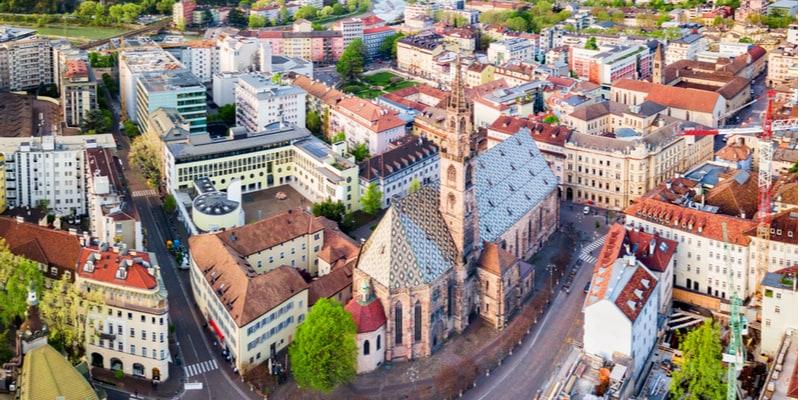 "/>
Bolzano is a city with two souls, two languages and two cultures, the Italian and the German. Two are also the streams that cross the city, the Talvera and the Isarco.
Two are the architectural styles that mark a clear break between the historic, typically Tyrolean centre and the Italian part, built during the Fascist years in the rationalist style. Framed by the majestic Dolomites, Bolzano is one of the most beautiful old towns in the Alps and was once an important centre for merchants. Start discovering the city from the 13th-century Tyrolean poet Walther von der Vogelwiede square, where you will find the 15th-century Gothic cathedral, dedicated to St. Mary of the Assumption, with its characteristic façade and Romanesque rose window.
Among the alleys and small squares of the old town centre, you will cross via Argentieri, full of restaurants, bars, inns and shops, piazza delle Erbe, where the fruit and vegetable market is held, via dei Bottai, today known for hotels and trattorias, but once the street where merchants from the north used to refresh themselves before coming to the commercial via dei Portici. Also worth a visit is the South Tyrol Museum of Archaeology, a museum itinerary that goes from the Palaeolithic to the Carolingian era and where the mummy of Otzi, 'the Iceman', also known as the 'mummy of Similaun', is housed. But also the Messner Mountain Museum, in the old Firmiano Castle, dedicated to mountaineering, history, art and spirituality.
Bolgheri, Tuscany 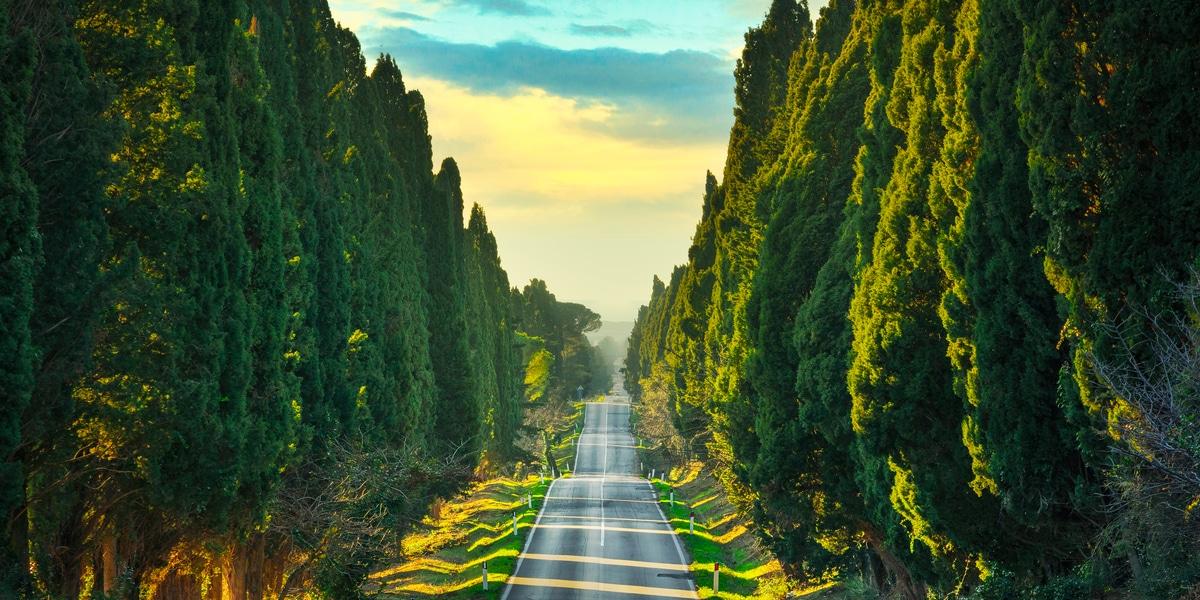 "/>
In the centre of the Livorno Maremma and on the border of the Colline Metallifere (Metal-bearing Hills) lies Bolgheri, a hamlet of Castagneto Carducci and an ancient medieval village built around the castle of the Della Gherardesca Counts. As you walk along the beautiful road lined with centuries-old cypress trees that leads from the sea to the ancient village, the verses of Giosuè Carducci's famous poem, Davanti San Guido, will come to mind: "I cipressi che alti e schietti van da San Guido in duplice filar...".
In Bolgheri one breathes an atmosphere of times gone by and the pace slows down while sipping a Bolgheri Doc. Rows of Cabernet and Merlot cover the hills of the upper Maremma and its coastline of dunes protected by pines, holm oaks and Mediterranean scrub. Bolgheri is therefore the perfect destination to enjoy a weekend of grape harvesting or the sea. A short distance away is the mythical Castiglioncello, which inevitably evokes Dino Risi's film Il Sorpasso, the enchanting Gulf of Baratti, San Vincenzo with its clear beaches or Cecina with its darker ones.
Colle Val d'Elsa, Tuscany 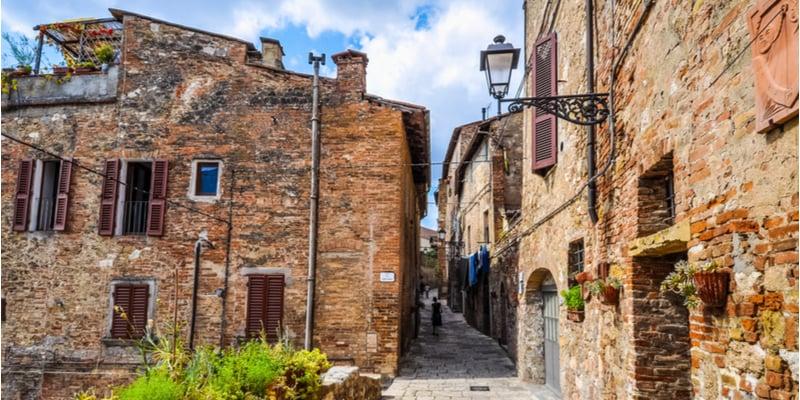 "/>
Less well-known than San Gimignano and Monteriggioni, but just as charming.
Colle Val d'Elsa is known as the 'city of crystal' because of its centuries-old craft tradition. Today, 95% of the crystal produced in Italy and 14% of the world's crystal comes from here. If you want to learn more, visit the Crystal Museum in the lower part of the modern city. Then take the public lift up to the historic centre, high up on the hill.
You will find yourself on a terrace with a wonderful view of the lower part of the city, the Tuscan hills and the surrounding countryside.
Soak up the medieval atmosphere of the historic centre and visit the beautiful Duomo. The 16th-century Palazzo del Capitano, Palazzo Buonaccorsi (15th century), Palazzo Giusti (15th-16th century), and the tower-house where the famous architect Arnolfo di Cambio was born (13th century) are also in the old heart of the town.
Between one crystal showcase and the next, admire the village and the castle, which can be accessed from the Ponte del Campana, one of the most evocative corners of Colle Val D'Elsa. It is the perfect place to take a hike along the Elsa River.
Prato, Tuscany 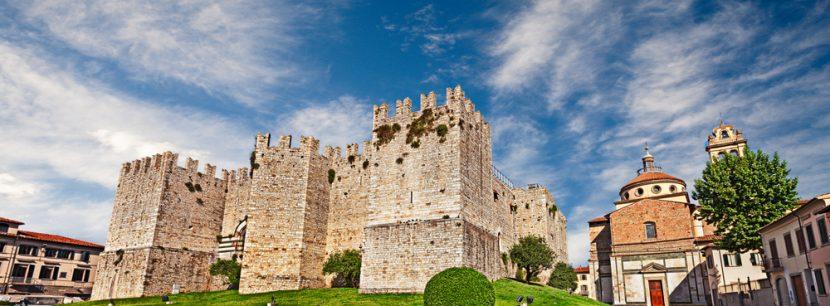
Prato is the second largest city in Tuscany by population and has been an important centre for the production and export of yarns since the Middle Ages. Only 17 km from Florence, Prato is an ancient town that dates back to the 10th century, but it was during the Renaissance that it reached its splendour, when artists such as Donatello, Filippo Lippi and Botticelli came to town.
Don't miss the Romanesque cathedral, the Textile Museum and the interesting Luigi Pecci Centre for Contemporary Art. Finally, note the numerous tower houses that crowd the historical centre, once inhabited by the nobility of Prato.
Montefalco, Umbria 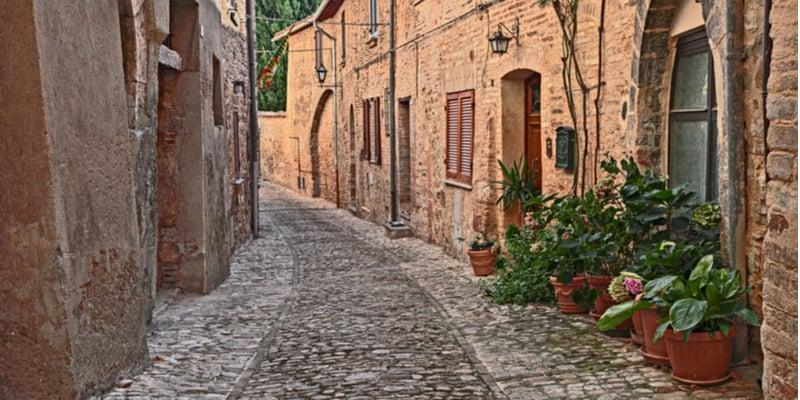 "/>
City of wine and oil, Montefalco is listed among the most beautiful villages in Italy and is part of the food and wine and cultural itinerary called 'La strada del Sagrantino' (The Sagrantino Road), which winds through five villages resplendent with art, unique flavours and fragrances: Montefalco, Bevagna, Giano dell'Umbria, Gualdo Cattaneo and Castel Ritaldi.
The Sagrantino grapes, from which the famous red wine is produced, intoxicate the village with their scents of blackberries and blackberries.
Called 'the railing of Umbria' because the Belvedere offers a wide panorama, Montefalco is a charming medieval village that stands on a hill surrounded by 12th century walls. Lose yourself in the narrow streets of the village and visit the Museo Civico di San Francesco in the former church of San Francesco, then go for walks and excursions on foot, by bike or on horseback to explore the surrounding Umbrian countryside. Take time for a gastronomic stop to sample local dishes and the famous Sagrantino wine.
Mattinata and Baia delle Zagare, Apulia 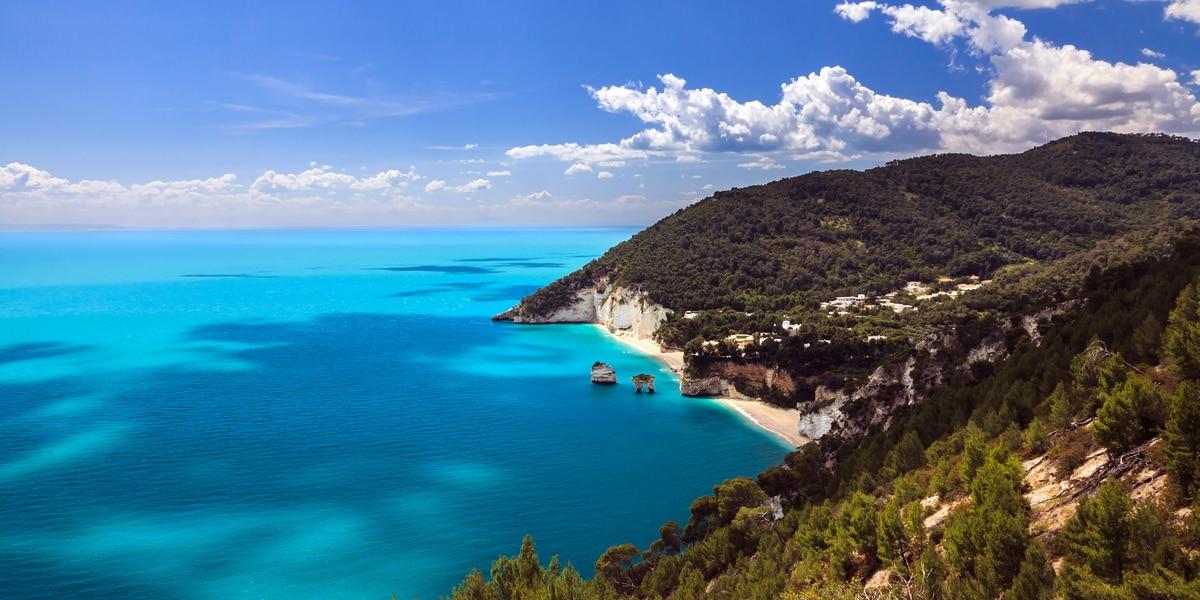 "/>
Located on the southern coast of the Gargano promontory and overlooking the Gulf of Manfredonia, Mattinata is a seaside resort that has been awarded the Blue Flag several times. In a sea of olive, almond and prickly pear trees sloping down to the sea, lies the white village of Mattinata, inhabited since the 5th century BC.
Carved out of the rock of two hills, Castellacelo and Coppa della Madonna, the village is protected by Monte Sacro, known in antiquity as Monte Dodoneo, and Monte Saraceno, where the remains of a Bronze Age necropolis can be seen. In the marina, the remains of an ancient Roman villa can be seen, and on Monte Sacro, the remains of the Abbey of the Holy Trinity.
Mattinata is especially worth a visit for its beautiful, wide beaches: kilometres of pebbles smoothed by a crystal-clear sea from where boat trips to the numerous grottos and coves can be started. The most beautiful beach is certainly Baia delle Zagare, which enchants with its stacks.
Also known as Baia dei Mergoli, it has three beaches, facing east and shaded in the late afternoon. The two longest (North Beach: 260m; South Beach: 450m) are separated by a rocky ledge. The third, further north, is 60m long and can only be reached from the sea.
The bay is surrounded by high cliffs, consisting of white limestone crags, in front of which two spectacular stacks called 'Arco di Diomede' and 'Le Forbici' emerge from the water, just a few metres from the shore. The name Baia delle Zagare derives from the name of the flower of the orange groves that grow in the area. In addition, the beaches of Vignanotica and Mattinatella are excellent alternatives.
Trapani, Sicily 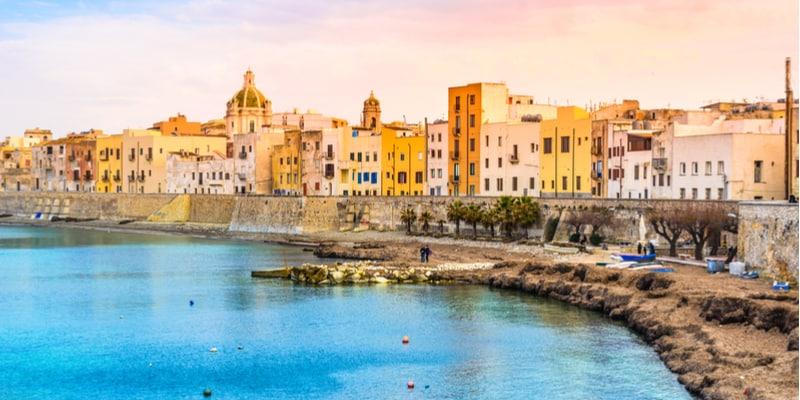 "/>
The historic centre of Trapani lies on a sickle-shaped tongue of land that was once an important crossroads in trade between Carthage and Venice.
Lying along the bay where in 1282 Peter of Aragon landed to begin the Spanish occupation of Sicily, Trapani long made its fortune from coral and tuna fishing and the production of salt and wine. Wander through the maze of narrow streets in the centre, reminiscent of those in Middle Eastern cities, and note the great influence of Spanish Baroque, the highest expression of which is the cathedral of San Lorenzo. The Purgatorio church, on the other hand, houses the so-called Misteri di Trapani, 20 life-size wooden statues from the 18th century that represent the stories of the Passion of Christ and are carried in procession during the Easter period.
Around Trapani, don't miss Erice, a charming medieval town overlooking Trapani harbour from the top of Mount Erice.
Also not far from the city are the not-to-be-missed salt pans, amidst white salt expanses and windmills, such as those of the Trapani and Paceco Salt Pans Nature Reserve, to the north near Trapani, and the Stagnone Nature Reserve, to the south near Marsala. From the port, sail to the Egadi Islands.
Chioggia, Veneto 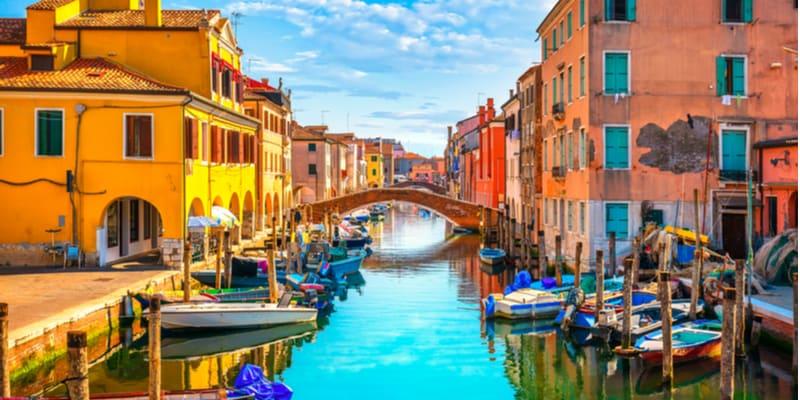 "/>
For its quiet calli and picturesque canals, it is called Little Venice. Of Roman origins, this Venetian strip became populated with the influx of inhabitants from the Veneto hinterland who fled the barbarian invasions.
From Venice, it is worth visiting Chioggia and strolling among the colourful houses and canals of San Domenico, Vena and Lombardo. The Corso del Popolo is a riot of grand architecture and precious relics: the Palazzo Comunale, the Granaio, the 13th-century San Nicolò, San Domenico and its Carpaccio, the Baroque S. Andrea and Piazzetta Vigo with its 12th-century column topped by El gato (a lion of St Mark).
Don't miss the Torre dell'Orologio (Clock Tower), a former lighthouse and watchtower, now a museum tracing the history of Chioggia, on top of which you can visit the astrological clock and belfry. Visit the Duomo, dedicated to Santa Maria Assunta in cielo, and the nearby church of S. Martino, which once housed a polyptych attributed to Paolo Veneziano, now on display in the nearby Museo Diocesano. It is interesting to take a tour of the pescheria, the characteristic fish market that runs from Tuesday to Sunday and is supplied directly by fishermen returning early in the morning from the sea. In the port of Chioggia you can still admire the 'bragozzi', typical brightly coloured boats, moored at the quay. Watch out for the skilful embroiderers of lace, an ancient local tradition.
Montefiascone, Lazio 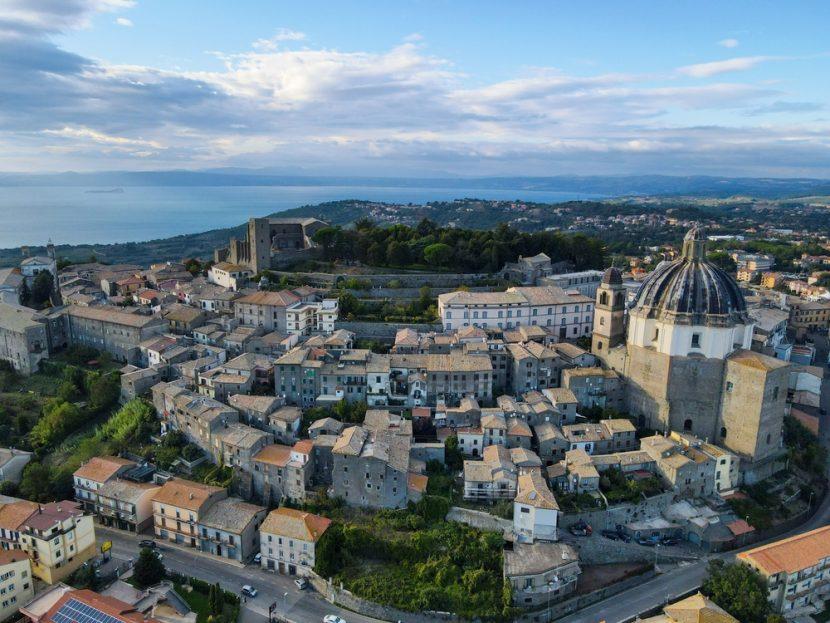
Montefiascone is a beautiful village in Alta Tuscia Viterbese, 5 km from Lake Bolsena.
Located at an altitude of 592 metres, in the south-eastern part of the caldera of the Volsini Mountains, it is the highest municipality in the province of Viterbo. In fact, Montefiascone is considered the belvedere of Tuscia, from which to admire a beautiful panorama of Lake Bolsena.
Montefiascone is also known for its Rocca dei Papi, a medieval fortress built during the 12th century, at the time of Innocent III. Its history is linked to the vicissitudes of various pontiffs who were forced to flee Rome due to invasions by the Normans and Saracens.
Although it has been damaged over time and today only part of it is visible, the fortress still retains its majesty and is one of the most evocative places in the town. The historical centre of Montefiascone then holds other important testimonies of the past, starting with the cathedral of Santa Margherita.
The majestic church, which stands out for its large dome, was started to be built in the 15th century at the behest of Alessandro Farnese, the future Pope Paul III, and artists such as Bramante and Antonio Sangallo il Giovane were involved. Also not to be missed is the Church of San Flaviano, characterised by a façade consisting of three Gothic arches and a Renaissance loggia supported by a colonnade. The church houses valuable frescoes, as well as the Chair of Urban IV and the tomb of Johannes Defuk, a central figure in the legend of the Est! Est!!! Est!!! Don't leave without having tasted the wine of Montefiascone, one of the major wine production centres in Lazio.
Soave, Veneto 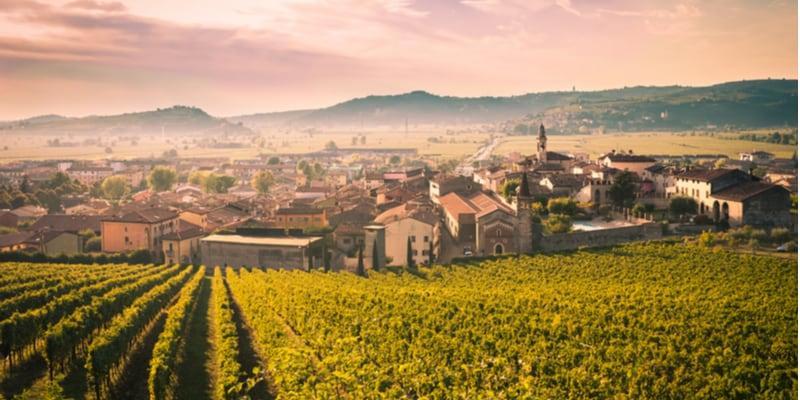 "/>
Soave is a pretty medieval village set in an enchanting landscape where time seems to stand still.
Soave is enclosed by Scaliger walls that have remained intact and are punctuated by 24 crenellated towers dating back to the 14th century. The quadrangular castle, on the other hand, dates back to the 10th century, and the Guard Room and stately flats can be visited.
In the centre of Soave, along Via Roma and Via Camuzzoni are the buildings of greatest historical and artistic interest, starting with the parish church of San Lorenzo, founded in 1303, containing a 15th-century baptismal font and 16th-century frescoes, and ending with Palazzo Scaligero, now the town hall.
In Piazza Antenna you can admire the Gothic-Venetian architecture of Palazzo Cavalli and on the opposite side the Palazzo dei Giudici, where the Magistrate's Court is located, with splendid porticoes and a 15th-century marble Madonna. Don't forget to taste the delicious white wine produced in Soave before continuing on to explore the East Veronese, an area where villages, castles, rural courtyards and ancient manor houses follow one another between mountains and plains.
Sperlonga, Lazio 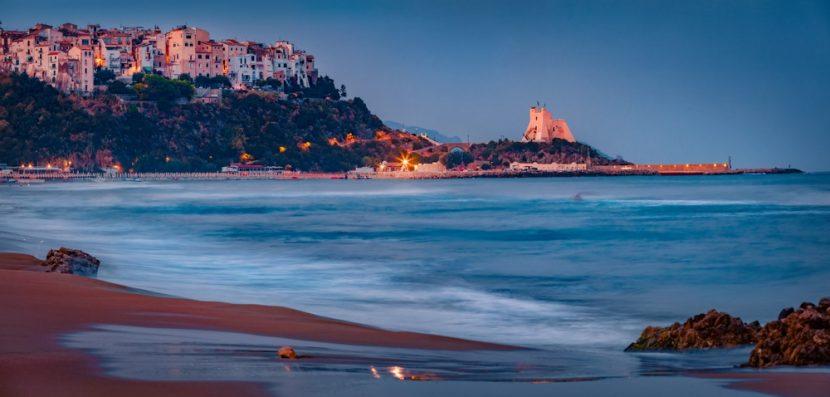
One of the 'most beautiful villages in Italy', Sperlonga will transport you to the white cities of the Mediterranean. Perched on a rocky ridge of the S. Magno hill, Sperlonga overlooks the enchanting Latium coastline. Beaches of golden sand stretch out at the foot of the village for about 10 km of coastline, lapped by crystal-clear waters, along which watchtowers and sea caves chase each other.
The original core of the typically Mediterranean village is still intact: white houses, narrow alleys full of craft shops and glimpses of blue. The archaeological evidence of the Villa of Tiberius is important, evoking the splendour of imperial Rome, while the Truglia tower tells a story of pirate raids and Saracen invasions.
Not far away is Gaeta with its large beaches of golden sand, such as Serapo, much loved by surfers for its long waves. Between the municipalities of Sperlonga and Gaeta is the famous Spiaggia dei 300 Gradini, a beautiful sandy beach about 1,500 metres long, set between high cliffs covered with vegetation.
Tirano, Lombardy 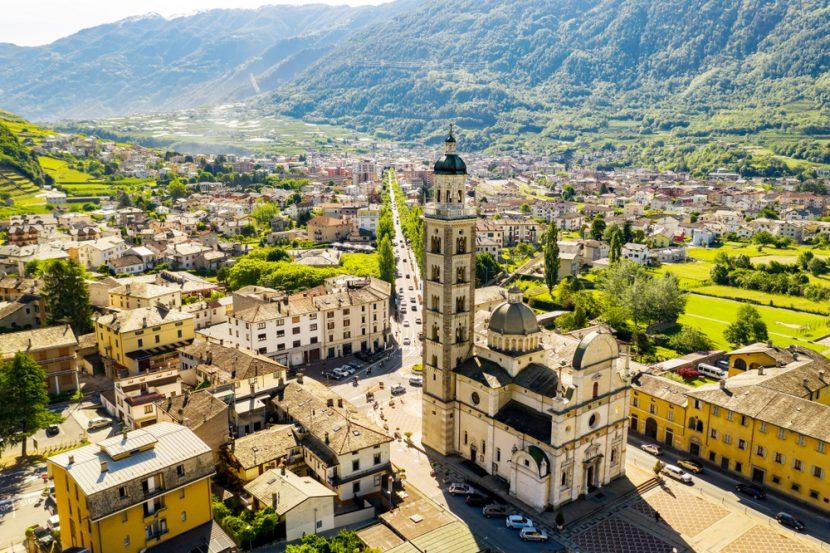
Just a stone's throw from Switzerland lies the village of Tirano, departure and arrival point of the Bernina red train, a UNESCO World Heritage site since 2008.
A slow city, Tirano is one of the most picturesque in Valtellina. Therefore, thanks to its strategic geographic position, this small town is an interesting destination for a cultural, artistic, food and wine and sporting getaway.
Tirano boasts valuable monuments such as the Sanctuary of the Madonna di Tirano, Palazzo Salis, Palazzo Torelli and numerous aristocratic residences.
Sports enthusiasts can indulge in a variety of activities, from cycling along the Sentiero Valtellina to rafting along the Adda, not forgetting skiing in the nearby Alps. If you just can't resist the lure of Switzerland, Sankt Moritz is about an hour's drive away.
Chamois, Aosta Valley 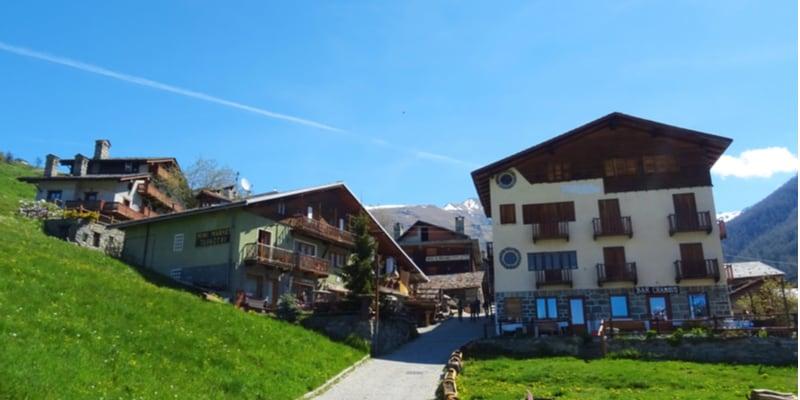 "/>
Located at an altitude of 1815 metres in the middle of the Matterhorn valley, Chamois is the highest municipality in Valle d'Aosta and one of the highest in Italy. In this village inhabited by a hundred or so people, cars are banned.
It can only be reached by cable car, departing from Buisson, at the cost of a tram ticket. The more experienced can reach it on foot via the mule track or from the village of La Magdeleine, following the path called the energy path, a walk suitable for everyone, or by bicycle, thanks also to the bike-sharing service operating during the summer months.
It is a pioneer municipality in soft-mobility tourism, and is part of the Alpine Pearls consortium: some thirty resorts spread over six countries promoting ecological holidays. Chamois, therefore, is the ideal destination for a green weekend in the name of sport. Among the many trekking trails to explore, don't miss the one that takes you to Lake Lod or to the panoramic Col de Nana (2775 m), to enjoy a spectacular view of the Matterhorn.
Italy


